About the Mitsubishi Lancer
Standard Lancers and high-performance Evolution variants require completely different VIN check approaches. While base models from 2002-2017 frequently appear with reconstructed titles and prior accident damage, Evo models demand scrutiny for undisclosed track use—a common issue given the enthusiast market that keeps these cars in hard driving conditions.
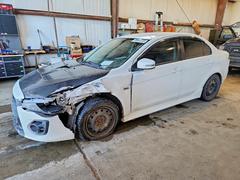
A VIN number lookup on this Mitsubishi Lancer includes real high-resolution auction photos sourced directly from Copart and IAAI, the largest salvage auction operators in the United States.
What a Mitsubishi Lancer VIN Check Reveals
A VIN number check on any Mitsubishi Lancer pulls records from state DMV offices, NHTSA databases, insurance industry filings, and salvage auction records across all 50 states. The report covers the following data categories:
- Accident and collision history
- Full odometer timeline
- Open safety recalls from NHTSA
- Title brands (salvage, flood, lemon law, total loss)
- Theft and recovery records
- Lien and ownership history
- Structural and frame damage
- Airbag deployment records
- State inspection history
- Prior vehicle use (fleet, rental, taxi, auction)
Mitsubishi Lancer VIN Number Location
Where to find the VIN on a Lancer
Lancer carries its VIN at the base of the driver's side windshield, on the door jamb sticker, and on a trunk lid label. Lancer Evolution variants carry a firewall stamp in the engine bay that's worth cross-referencing given the model's salvage-rebuild history. Lancer Evo has one of the highest salvage-rebuild rates in its price class, the firewall stamp is rarely disturbed in cosmetic repairs and should always be verified.
The VIN also appears on the vehicle registration, insurance documents, and title. All locations should match. A mismatch between VIN plates is a potential indicator of a rebuilt or salvage vehicle.
Common Issues Found in VIN Reports for the Mitsubishi Lancer
VIN history reports on used Mitsubishi Lancer vehicles frequently show accident and collision claims, title discrepancies, and odometer irregularities. Any open NHTSA recall notices tied to the specific VIN will appear in the report, along with the recall completion status where that data is available.
Mitsubishi vehicles carrying a VIN prefix of JA3, JA4, ML32 are traceable through all 50 state DMV systems and the National Motor Vehicle Title Information System (NMVTIS). Coverage for vehicles registered after 1990 is generally comprehensive.
NHTSA Safety Recalls
Mitsubishi Lancer — last 3 model years
What Lancer owners report across recent generations
2008–2017 (CY generation)
Mitsubishi ended the Lancer in the US after the 2017 model year. CarComplaints has few reports, so the data is thin. The 2008 and 2009 draw the most NHTSA complaints, and the clearest pattern is rust on the front cross member that can let a lower control arm break loose, mostly in road salt states. Owners also report air bag warning lights, failed brake lights and transmission trouble. CarComplaints lists a rotted subframe, a poorly designed bumper and an air bag warning light for 2008. Recalls cover the corroded cross member, sunroof glass that may detach and brake booster check valves. [1] [2] [3]
What to check before buying
Run the VIN through the NHTSA recall lookup, including the front cross member, sunroof glass and brake booster recalls. Put the car on a lift and check the front cross member, control arm mounts and subframe for heavy rust or repairs. Confirm the air bag light goes out after starting, check that all brake lights work and watch for harsh or slipping shifts on the drive.
- NHTSA recalls and owner complaints, 2008 Mitsubishi Lancer
- NHTSA recalls and owner complaints, 2009 Mitsubishi Lancer
- CarComplaints.com, 2008 Mitsubishi Lancer problems
Updated September 25, 2026 · Summarized in our own words by VinNumber.net from public owner reports; individual experiences vary.