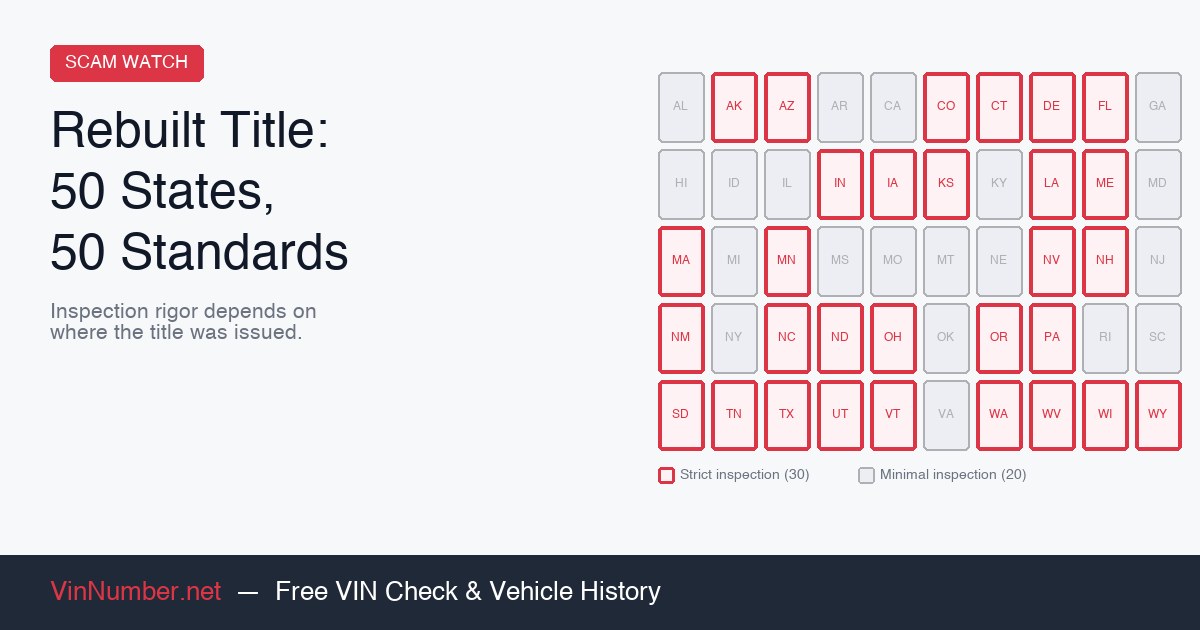
Every state has a rebuilt title category, and every state has some kind of inspection process that a salvaged vehicle has to pass before it can carry that designation, but the inspection requirements vary so much from one jurisdiction to the next that the rebuilt brand has become an unreliable signal of what was actually verified before the vehicle went back into circulation.
In states with aggressive programs the vehicle has to be examined before cosmetic work begins, while structural repairs and welds and replaced panels are still exposed, and the inspector walks the frame looking for evidence of prior damage that was not disclosed in the application, checks VIN stamps at every factory location including secondary stamps that most buyers do not know exist, and compares the parts receipts against the damage estimate to confirm that the components installed actually came from documented sources with traceable VINs rather than from a parts car that was never run through the system.
The documentation package in these states includes photographs of the vehicle in its wrecked condition before any work started, a complete list of every part used in the rebuild with the donor VIN recorded for any used component, and in some cases a requirement that the rebuilder hold a state license and carry a bond that can be pulled if a vehicle they certified later turns out to have been structurally compromised or fraudulently documented.
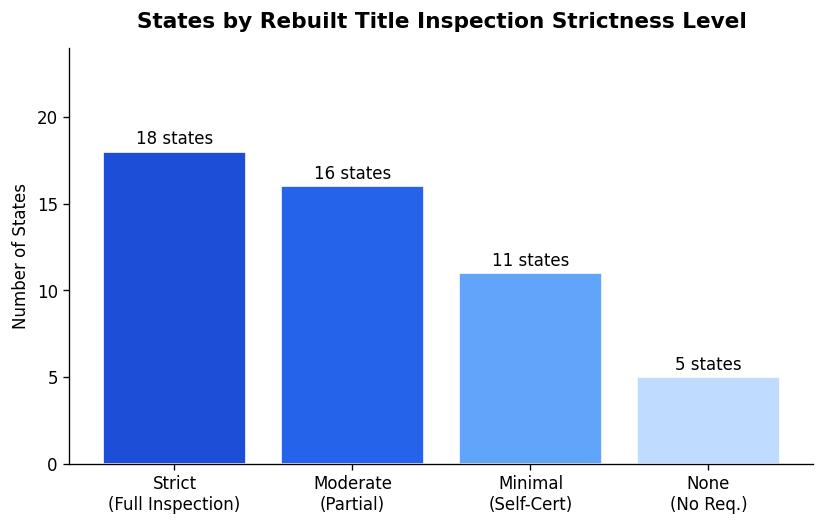
That level of scrutiny takes time and costs money and creates a paper trail that follows the vehicle through every subsequent transaction, which is exactly what the program is designed to do, and a rebuilt title that comes out of one of these states represents something close to a genuine verification that the vehicle was inspected by someone who knew what to look for and had the authority to reject it if the work did not meet standards. The NICB has pushed for years to get more states to adopt inspection protocols at this level, but the variation persists because vehicle titling is a state function, and there is no federal standard that requires any particular level of rigor before a salvaged vehicle can be redesignated as rebuilt and returned to the road.
Other states run their rebuilt programs with far less friction and the inspection in these jurisdictions can amount to a safety check that confirms the lights and brakes and tires are functional and that the VIN on the dashboard matches the VIN on the application, with no documentation of the repair process and no requirement that the vehicle be seen before paint and body work made the damage invisible.
Some of these states do not require the vehicle to be physically present at the time of registration, which opens a path for a flood car or a structural wreck to be cosmetically restored in one state and titled as rebuilt in another without anyone in the receiving jurisdiction ever examining it, and the rebuilt brand that results from that process is permanent and follows the vehicle for life even though the inspection behind it would not have caught frame damage or corrosion or rolled odometer readings or any of the other conditions that a more rigorous program is designed to screen out.
The 2024 hurricane season pushed somewhere around 400000 to 500000 flood damaged vehicles into salvage status according to NICB estimates and a significant percentage of those will end up title washing across state lines as rebuilt through states that do not enforce flood brands from other jurisdictions and do not require the kind of documentation that would make the flood history visible in a vehicle history report, which means buyers in those states or in states where the vehicles are eventually resold will be looking at rebuilt titles that technically disclose prior damage but do not disclose how superficial the inspection was or how much of the vehicle history was never examined.
A VIN check against the NMVTIS database will show that the vehicle was branded salvage in one state and rebuilt in another and will show the dates and jurisdictions for each status change, but it will not show whether the rebuilt inspection was conducted by a state employee who spent two hours going over the frame and the VIN locations and the parts documentation or by a private shop that glanced at the safety equipment and stamped the form, and that gap between what the rebuilt brand technically means and what it actually verified is wide enough to matter and has been for a long time.