
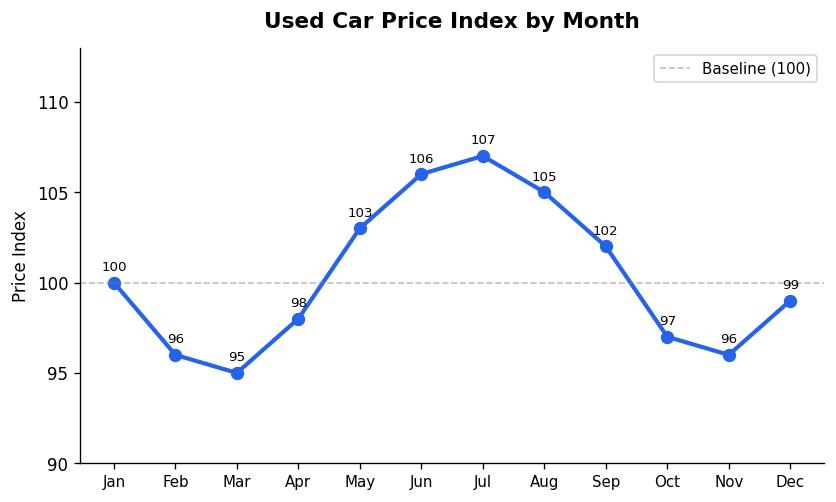
The used car market has been tracking pre pandemic seasonal patterns for about a year and a half now, and for the first time since 2019, the timing of a purchase actually matters in a predictable way. The average used car listing price in February 2026 sat at 25287 dollars, down 1.1 percent from January, following the same winter softening that used to be reliable before the pandemic blew the supply curve apart. The Manheim Used Vehicle Value Index closed December 2025 at 205.5, up 0.4 percent year over year at wholesale, and Cox Automotive's analysts noted that seasonal patterns in both wholesale and retail had returned to something close to their long term averages. That is a significant shift from 2021 through early 2024, when seasonal pricing signals were drowned out by supply shortages, production gaps, and the roughly 8 million vehicles that were never built during the pandemic shutdowns and will never enter the used market. The seasonal window that matters most for buyers opened in late December and runs through early February, and in 2026, it looks like it did what it has always done. Prices softened, inventory aged on lots, and sellers who carried vehicles through the holiday period got more flexible on price.
The tax refund season that starts hitting bank accounts in late February and runs into April is when the pattern reverses. Refunds in 2026 are expected to come in roughly 1000 dollars higher than 2025 on average, and that money flows into vehicle purchases fast, especially in the compact and subcompact segments — the same which vehicle segments hold value analysis shows these bottom out first, where first time buyers tend to shop. Prices historically rise 5 to 10 percent between January lows and the March and April peak, and 2026 does not look like it will be different. Dealers ended January with just 31 days of used inventory priced under 15000 dollars, nine days below the industry average, and that thin supply at the entry level means refund season demand hits a market that doesn't have a lot of room to absorb it without prices moving up. The tariff situation adds a layer on top of the seasonal pattern that did not exist before 2025. New vehicle prices have been pushed up by tariffs on imported vehicles and parts, and when new car prices go up, some of those buyers move to the used market, which tightens used inventory and puts upward pressure on prices even outside the normal seasonal cycle. Used vehicles are selling faster than they have in recent years, with the average retail days to sell running at about 36 days through late 2025 compared to 55 days a year earlier. That speed of sale makes it harder to wait out a high price because somebody else is buying the vehicle while you are thinking about it.
Late summer and early fall create a different kind of window. New model year inventory starts arriving at dealerships in August and September, and the outgoing model year vehicles become prior year stock overnight. A 2026 model that shows up on the lot in September makes the 2025 version sitting next to it look dated, even when the differences between the two are minimal. Certified pre owned inventory and near new dealer stock are where the discounts concentrate during that transition, typically 5 to 8 percent on the outgoing year. The end of November through December is when the most aggressive pricing tends to appear at franchised dealerships. Sales staff working against monthly and annual quotas get the most flexible in the final weeks of the year, foot traffic drops in cold weather across most of the country, and holiday spending pulls consumer attention away from large purchases. December transactions have historically averaged 4 to 7 percent below the annual mean. The last two weeks of December, when the year is genuinely ending, and quota pressure is at its highest, is where the maximum effect concentrates.
Vehicle type creates its own seasonal pricing layer that runs on top of the monthly pattern. Convertibles and sports cars trade at their annual highs in late spring and summer and their lows in October through December. Four wheel drive and all wheel drive vehicles, including SUVs marketed for winter capability, see demand and prices climb in October as buyers prepare for winter weather and hit their annual lows in April and May when nobody is thinking about snow. Used EVs are heading into their own pricing cycle in 2026 that has less to do with the calendar and more to do with the wave of off lease returns expected to exceed 300000 units this year. Used EV prices were already declining at 2.4 percent year over year through November 2025, and with federal EV subsidies gone and new affordable electric models entering the market, the expectation is another 5 to 10 percent drop by late 2026. That is a segment where the seasonal pattern may not matter much because the structural oversupply is going to push prices down regardless of what month it is.
None of the seasonal timing protects against a vehicle with a hidden history. A salvage title lookup and a VIN check before purchase confirm whether the vehicle carries damage, title brands, or odometer issues that the seller's price does not reflect. The best deal in December on a vehicle with a washed title or undisclosed flood damage is not a deal at any price, and the vehicle history report is what separates a seasonal bargain from a seasonal mistake.