About 37.4 million used vehicles changed hands in the United States in 2024, close to 20 million of those at retail. NHTSA estimates that 450000 of them carried tampered odometers. The NICB counted roughly 347000 flood damaged vehicles from the 2024 hurricane season still working their way into resale channels well into 2025, many retitled through states that do not enforce the flood brand from the originating jurisdiction. Wisconsin's DMV enforcement division alone flagged nearly 6000 rolled back instruments in a single calendar year. The arithmetic on buyer risk at this volume is bad, and it does not improve unless you run a verification process covering twenty distinct points before money changes hands. Most buyers do fewer than five, which is probably generous.
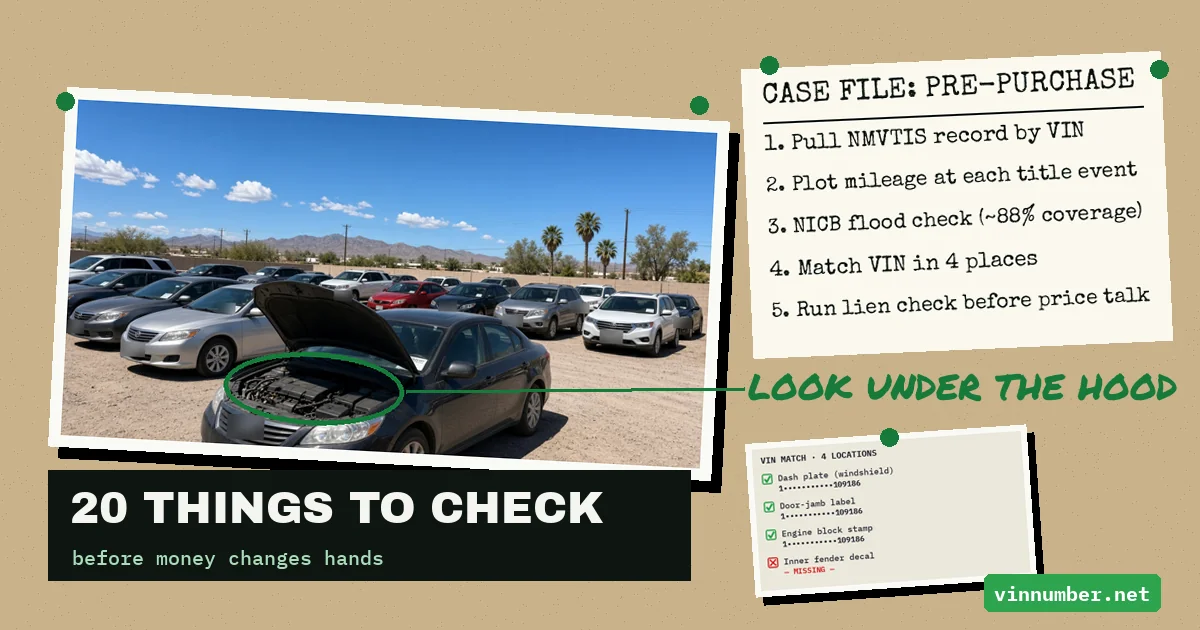
Start with the vehicle history report. Pull the NMVTIS record by VIN before you drive anywhere to look at the car. The report carries title brand history, salvage and junk designations, total loss filings from participating insurers, and an ownership chain across every state where the vehicle was titled. It catches title washing that no physical inspection ever will, because a salvage brand that got laundered through a lenient jurisdiction disappears from the paper title but remains in the federal record. I have pulled files on vehicles that moved through three states in under eighteen months with no genuine change of ownership, just a title washing circuit that ended with a clean document on a structurally compromised car. Verify the odometer against the mileage trail in that same report. The dashboard number means nothing on its own anymore. Software recalibration tools retail for under $200 and work on most digital clusters, so the only reliable verification is the documented mileage at each title event, service record, and state inspection, plotted across time. If the line does not go consistently upward, or if it drops between two events, the odometer was recalibrated, and the vehicle is worth whatever a TMU designation makes it worth, which is considerably less than the asking price. Run the flood car history through the NICB database separately. Their coverage accounts for insurers writing approximately 88 percent of personal auto policies, which means the remaining 12 percent and every uninsured vehicle that sits in stormwater goes unrecorded. That gap closes only when someone gets under the vehicle and looks.
Check the title document for anything unusual in the print quality, the paper stock, or the state seal, because counterfeit titles exist in this market, and they are not always obvious. Then match the VIN across the physical locations on the vehicle itself. The dashboard plate through the windshield, the federal certification label on the driver's door jamb, the engine block stamp, and the manufacturer decals on the inner fenders should all agree with each other and with the title. A missing inner fender decal on one side typically indicates that the panel was replaced, which should be noted in the vehicle's collision history report. Grinding marks, re-stamped characters, or adhesive residue around any VIN plate are conditions that end the transaction. Run the lien check before you negotiate the price, because outstanding finance that the seller neglects to mention follows the vehicle to the new owner, and unwinding a title with an active lien is expensive, if it is even possible. Pull the NHTSA open safety recall history lookup by VIN while you are at it. More than 29 million vehicles were recalled in the most recent full reporting year, completion rates on older models are persistently low, and buying a vehicle with an unresolved recall on airbags or fuel system integrity creates a liability and insurance complication that most buyers do not anticipate.
Walk around the exterior from a low angle, crouching at each corner and sighting down the body panels at bumper height. Filler and respray work shows up as waviness that disappears completely at normal standing height, which is why sellers prefer you look at the car while upright. Panel gaps that vary in width between the left and right sides of the vehicle confirm collision repair. Get underneath if you can, or at least look under with a flashlight. Scaling rust on the subframe and floor pans tells you about salt or submersion exposure; black deposits on the exhaust joints tell you about leaks. Under the hood, look at the engine block for oil weeping down from gasket surfaces, and check the underside of the oil filler cap. A milky or foamy residue there means coolant is mixing with oil, which on most engines points to head gasket failure. Squeeze the radiator hoses while you are in there. Soft or cracked rubber after five or six years is normal; soft or cracked rubber on a vehicle that the seller claims had regular maintenance is a contradiction worth noting. Check the brake fluid and power steering fluid levels. Read the tires. Uneven wear across the tread contact patch signals alignment or suspension geometry problems, and when the front and rear axles show completely different wear patterns, the tires were rotated to conceal a problem rather than address it.
Inside the vehicle, the wear on the seat bolsters, the pedal rubber, and the steering wheel surface should correspond to the mileage the seller claims. These components degrade based on hours of use, and a vehicle that allegedly has 35000 miles but shows the interior wear profile of something north of 130000 is either misrepresenting the odometer or was previously in commercial service. Both explanations change the valuation. Plug in an OBD-II reader and pull the stored and pending diagnostic codes. Takes about three minutes. Any seller who refuses this should not get your business. On the test drive, brake from moderate speed and confirm the vehicle stops straight without pulsation or pulling. Run it up through the gears under real acceleration and then cruise at highway speed; harsh shifts, slipping, or delayed engagement in the transmission mean a repair bill that starts at several thousand dollars on most modern automatics. Pay attention to vibration at highway speed, because a drivetrain issue and a tire balance issue feel similar, and the seller may have recently rebalanced the wheels to mask the former. Test every electrical component individually. Every window, every mirror, every lock, every seat motor, the climate control on all settings, every lighting circuit, the infotainment system, and whatever driver assistance features the vehicle carries. Intermittent electrical faults in a vehicle whose NMVTIS record shows no flood history deserve a much closer look at the connector terminals in the engine bay and behind the dashboard for corrosion. Water damage that the cleaning process hid from the interior almost always leaves traces in the wiring. The last thing to evaluate is the documentation the seller can produce. Service records, parts receipts, and the original window sticker, if they still have it. A continuous maintenance trail that tracks with the vehicle's age and mileage tells you something real. A verbal assurance that the oil was changed regularly tells you nothing, and the purchase offer should reflect that.