Enter a Chevrolet Impala VIN for a free NHTSA vPIC decode: build details, the generation it belongs to and the NHTSA recalls for its model year. Owner reports follow below.
VIN prefix2G11G1
Free decode plus the NHTSA recalls for its model year. 17 characters, no I, O or Q.
Chevrolet Impala
About the Chevrolet Impala
Chevrolet sold the Impala in the US for model years 1994–2020, across four generations. Gen 7 first (1994–1996), then Gen 8 (2000–2005). The Gen 9 arrived for 2006–2013, and the Gen 10 took over for 2014–2020. Across those years NHTSA lists 32 vehicle recall campaigns and 10,430 owner complaints. Complaints pile up on the Gen 8. Its 2004 and 2000 model years alone account for 1,890 of them, with owners bringing up electrical system most often and engine and cooling after that. EPA rates the Gen 7 at 18–19 mpg combined, while the Gen 10, whose lineup includes hybrid versions, gets 20–28 mpg. A free VIN decode gives you NHTSA vPIC’s record for the car (model year, engine, plant) and the NHTSA recalls for its model year. It won’t show theft, flood or lemon-law history.
US model years1994–2020
GenerationsGen 7 · Gen 8 · Gen 9 · Gen 10
NHTSA recall campaigns32
Owner complaints10,430 at NHTSA
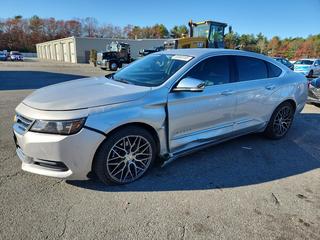
Auction lot photo, for illustration
Generations
Chevrolet Impala generations
Four generations since the 1994 model year. The Gen 8 (2000–2005) has the most owner complaints, the Gen 10 (2014–2020) the most recall campaigns (13).
NHTSA has 32 campaigns on file for Impala model years 1994–2020, and the 2014 shows up in more of them than any other year (12), ahead of the 2000 (7). Move the line to your model year to see which apply.
2014
Air bag inflator, fire risk or do-not-drive/park-outside advisorySafety recallCanada only
Pick a row
What to ask
Source: NHTSA recall database, vehicle campaigns only; row text is NHTSA’s summary. A listed year does not mean every car is covered, so check the VIN.
Canada rows: Transport Canada recalls database. Transport Canada recalls that match an NHTSA campaign are folded into that row by VinNumber.net; rows with the Canadian flag have no NHTSA match. Contains information licensed under the Open Government Licence – Canada · Transport Canada.
Owner reports · NHTSA complaints
What Chevrolet Impala owners report
Owner summaries + NHTSA data
Complaints peak with the 2004 (1,072 of 10,430). Tap any bar or generation.
10,430NHTSA complaints, 1994–2020
574mention a crash
330mention a fire
529injuries reported
Owner complaints by model yearGen 10: 1,265 complaints · most for the 2014 (636)
19941995·2000····2005····2010····2015····2020
Top complaint areas · Gen 10
Mentions in 1,265 complaints, 2014–2020.
Electrical system386
Steering225
Electronic stability control134
Brakes128
Engine and cooling127
Air bags119
Crashes 54Fires 24Injuries 44
2014–2020 (Gen 10)
NHTSA data summary
The 2014 stands out. On its own it has 636 of the ’s 1,265 complaints (50%), and owners across the generation name electrical system most often (386 mentions), then steering (225).
Top complaint areas · Gen 9
Mentions in 4,281 complaints, 2006–2013.
Electrical system1,048
Engine and cooling791
Electronic stability control636
Air bags560
Steering557
Powertrain (transmission, driveline)543
Crashes 281Fires 64Injuries 257
2006–2013 (Gen 9)
NHTSA data summary
Of the eight model years, the 2009 (824) and 2008 (810) drew the most complaints. Owners across the generation name electrical system most often (1,048 mentions), then engine and cooling (791).
Top complaint areas · Gen 8
Mentions in 4,730 complaints, 2000–2005.
Electrical system2,047
Engine and cooling956
Exterior lighting561
Steering423
Brakes398
Powertrain (transmission, driveline)283
Crashes 235Fires 238Injuries 227
2000–2005 (Gen 8)
NHTSA data summary
Electrical system owns this generation. Its 2,047 mentions are more than twice the next area, engine and cooling (956). Complaints peak with the 2004 (1,072 of 4,730). Of all Impala complaints, 45% are for the .
Top complaint areas · Gen 7
Mentions in 147 complaints, 1994–1996.
Electrical system24
Visibility (glass, wipers, mirrors)21
Fuel system20
Powertrain (transmission, driveline)18
Steering18
Brakes16
Crashes 4Fires 3Injuries 1
1994–1996 (Gen 7)
NHTSA data summary
By area, nothing stands out. Electrical system leads with 24, with visibility (21) and the fuel system (20) close behind. Complaints peak with the 1996 (88 of 147).
What Impala owners report across recent generations
Owner summary
2014–2020 (10th generation)
The 2014 draws the most complaints. Many NHTSA owners describe StabiliTrak and power steering warnings appearing together and the steering suddenly turning heavy. CarComplaints ranks rear side detection system failure first for 2014, followed by brake failure and a rear window that shattered. Recalls cover an electronic parking brake on some 2014 models that may not fully release and leave the pads dragging, and a center console on some 2014–2015 models that may not stay latched in a crash. [1][2]
2006–2013 (9th generation)
Complaints are spread across several systems. CarComplaints ranks premature tire wear first for 2008, followed by power locks that malfunction and a rough running engine. On the 2009, NHTSA complaints often involve an air bag warning light. Recalls cover an ignition switch on 2006–2013 models that heavy key rings or a jolt can move out of run, shutting off the engine, and wiring for the passenger presence sensor on some 2009–2010 models that the seat frame can damage. [3][4]
✓
What to check before buying
Run the VIN through the NHTSA recall lookup, including the ignition switch recall on older models and the parking brake recall on 2014 models.
Ask for tire and alignment records.
On the drive, watch for StabiliTrak, power steering or air bag warnings, feel for steering that turns heavy and check that the power locks and rear side alerts work.
EPA lists 81 Impala versions for model years 1994–2020 (gas and hybrid). The lowest tailpipe CO₂ is 312 g/mi, for the 2014 hybrid. Pick a model year and powertrain to see each version.
Gen 71994–1996
18–19 mpg · CO₂ 468–494 g/mi
Gen 82000–2005
20–22 mpg · CO₂ 404–444 g/mi
Gen 92006–2013
19–23 mpg · CO₂ 386–468 g/mi
Gen 102014–2020
20–28 mpg · CO₂ 312–437 g/mi
2019
25combined MPG
362CO₂ grams per mile (tailpipe)
$2,700EPA yearly fuel cost
3/10Smog rating
1 = worst · 10 = cleanest
5/10Greenhouse gas rating
Federal Tier 3 Transitional Bin 110Emission standard
Cleanest gas version of 2019: Impala · Auto (S6), 4 cyl, 2.5 L — 25 MPG · 362 g/mi
Best (lowest) CO₂ by model year
GasHybrid
Annual fuel cost is EPA’s estimate at its current fuel-price assumptions (15,000 miles a year, 55% city driving), so older years are priced at today’s fuel prices. Smog rating and emission standard can differ by sales area (federal vs. California); both are shown. Greenhouse-gas ratings start with the 2013 model year. Source: fueleconomy.gov.
Compare rivals
Impala vs Toyota Avalon vs Chrysler 300
NHTSA + EPA data
Take 2006–2013. NHTSA lists 8 recall campaigns for the Impala, against 15 for the Toyota Avalon and 22 for the Chrysler 300. Pick a range to compare.
NHTSA recalls (vehicle campaigns for all powertrain versions; equipment and tire campaigns left out), complaints (not sales-adjusted) and 5-Star overall ratings for the latest year rated for all three; EPA mpg, engines and drive. Rivals: same EPA class, picked by VinNumber.net.
Chevrolet Impala VIN number location
Where to find the VIN on an Impala
Tap a spot. Every location should show the same 17 characters.
Impala's VIN plate sits at the base of the driver's side windshield. The door jamb sticker and a label inside the trunk lid near the latch are the secondary locations. The Gen 10 generation starts with the 2014 model year; the VIN’s 10th character (E for 2014) shows which side of that line a car falls on.
The title, registration and insurance card show the VIN as well. All locations should match.
FAQ
Common Chevrolet Impala VIN questions
Which Chevrolet Impala model years have the most owner complaints?
The 2004 leads with 1,072, ahead of the 2009 (824) and 2000 (818). Those first two alone make up 18% of the 10,430 Impala complaints filed with NHTSA, not adjusted for sales.
How many recalls has the Chevrolet Impala had?
NHTSA’s recall records show 32 vehicle campaigns for model years 1994–2020, leaving out equipment and tire campaigns. By generation, Gen 10 leads with 13. Then come the Gen 8 (12), Gen 9 (8) and Gen 7 (0), and a campaign can span two generations.
Which Chevrolet Impala recalls are high risk?
03V-051 covers air bag inflators that can rupture. NHTSA’s record names a fire risk in 01V-136, 04V-090, 09V-116, 15V-701, 15V-201, 06V-419, 11V-398, 14V-541 and 2 more. Each should show as closed on a VIN check.
Which Impala generation am I looking at?
By US model year, the Gen 7 is 1994–1996 and the Gen 8 2000–2005. Gen 9 spans 2006–2013, Gen 10 2014–2020. Read the year off the VIN’s 10th character (E is 2014).
What fuel economy does the Chevrolet Impala get?
It varies. EPA rates the 2014–2020 Gen 10 at 20–28 mpg combined, depending on engine and drive, up from 18–19 mpg for the 1994–1996 Gen 7 (fueleconomy.gov).
How does the Chevrolet Impala compare with the Toyota Avalon and Chrysler 300 on recalls?
For 2014–2020 models the Impala has 13 NHTSA recall campaigns. The Toyota Avalon has 16, the Chrysler 300 13. Complaints run 1,265, 312 and 749 in that order, with no sales adjustment.
What crash rating does the Chevrolet Impala have?
NHTSA’s 5-Star Safety Ratings give the 2020 Impala 5 stars overall. One version, FWD, is rated.