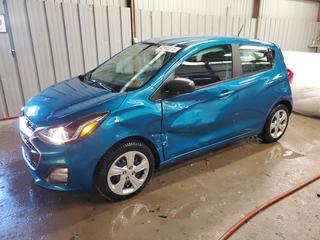
Chevrolet Spark Model Generations
US-market timeline. The first two generations (1998–2009) were not sold in the US.
What a Chevrolet Spark VIN Check Reveals
A VIN number check on any Chevrolet Spark pulls records from state DMV offices, NHTSA databases, insurance industry filings, and salvage auction records across all 50 states. The report covers the following data categories:
- Accident and collision history
- Full odometer timeline
- Open safety recalls from NHTSA
- Title brands (salvage, flood, lemon law, total loss)
- Theft and recovery records
- Lien and ownership history
- Structural and frame damage
- Airbag deployment records
- State inspection history
- Prior vehicle use (fleet, rental, taxi, auction)
Chevrolet Spark VIN Number Location
Where to find the VIN on a Spark
The Spark carries its VIN on a plate at the base of the driver's side windshield. The door jamb sticker is the primary secondary location. Given the Spark's role as a city car, its VIN history often includes multiple minor-impact claims, rideshare use records, and, for some 2016-2022 units, odometer readings reflecting commercial mileage accumulation from app-based driving services.
The VIN also appears on the vehicle registration, insurance documents, and title. All locations should match. A mismatch between VIN plates is a potential indicator of a rebuilt or salvage vehicle.
Common Issues Found in VIN Reports for the Chevrolet Spark
VIN history reports on used Chevrolet Spark vehicles frequently show accident and collision claims, title discrepancies, and odometer irregularities. Any open NHTSA recall notices tied to the specific VIN will appear in the report, along with the recall completion status where that data is available.
Chevrolet vehicles carrying a VIN prefix of 1G1 (cars US), 1GC (trucks US), 1GN (SUVs US); 2G1, 2GC, 2GN (Canada); 3G1 (Mexico); KL8 (South Korea) are traceable through all 50 state DMV systems and the National Motor Vehicle Title Information System (NMVTIS). Coverage for vehicles registered after 1990 is generally comprehensive.
NHTSA Safety Recalls
Chevrolet Spark — last 3 model years
What Spark owners report across recent generations
2016–2022 (4th generation)
Owner data is thin, with only a few dozen NHTSA complaints a year and a few CarComplaints reports. NHTSA owners of the 2017 describe transmission jerking and hard shifts and shuddering at highway speed. CarComplaints lists hesitation when accelerating and no start problems for 2016, and a transmission that slips and jerks for 2019. Chevrolet ended the Spark after 2022. A recall covers front passenger air bags on some 2016–2017 models that may injure an improperly seated passenger. [1] [2] [3]
2013–2015 (3rd generation)
The 2013 and 2014 draw the most complaints. NHTSA owners of the 2014 most often describe transmission trouble, hesitation and stalling. CarComplaints lists excessive oil consumption, no acceleration and engine stalling for 2013, and hesitation from a stop, slipping and transmission failure for 2014. Recalls cover secondary hood latches on 2013–2015 models that may corrode and fail to engage, and front lower control arms on some 2014 models. [4] [5] [6]
What to check before buying
Run the VIN through the NHTSA recall lookup, including the hood latch recalls on 2013 to 2015 models. Ask for transmission repair records and check the oil level for signs of heavy consumption. On the drive, pull away from a stop several times to feel for hesitation, slipping or jerky shifts.
- NHTSA recalls and owner complaints, 2017 Chevrolet Spark
- CarComplaints.com, 2016 Chevrolet Spark problems
- CarComplaints.com, 2019 Chevrolet Spark problems
- NHTSA recalls and owner complaints, 2014 Chevrolet Spark
- CarComplaints.com, 2013 Chevrolet Spark problems
- CarComplaints.com, 2014 Chevrolet Spark problems
Updated September 25, 2026 · Summarized in our own words by VinNumber.net from public owner reports; individual experiences vary.