Mercedes-Benz E-Class VIN Number Check

Enter a Mercedes-Benz E-Class VIN for a free NHTSA vPIC decode: build details, the generation it belongs to and the NHTSA recalls for its model year. Owner reports follow below.

VIN prefixWDBWDDW1K

Free decode plus the NHTSA recalls for its model year. 17 characters, no I, O or Q.

Vinny, the VinNumber key mascot
Mercedes-Benz E-Class

About the Mercedes-Benz E-Class

Mercedes-Benz has sold the E-Class in the US since the 1994 model year, and there have been six generations. The W124 came first (1994–1995); W210 (1996–2002), W211 (2003–2009), W212 (2010–2016), W213 (2017–2023) followed, and the W214 took over for 2024–2026. Across those years NHTSA lists 100 vehicle recall campaigns and 5,338 owner complaints. Complaints pile up on the W211. Its 2006 and 2005 model years alone account for 1,063 of them, with owners bringing up fuel system most often and the brakes after that. EPA rates the W124 at 16–25 mpg combined, while the W214, whose lineup includes hybrid and plug-in hybrid versions, gets 22–28 mpg, counting the plug-in hybrid on gas alone. A free VIN decode gives you NHTSA vPIC’s record for the car (model year, engine, plant) and the NHTSA recalls for its model year. It won’t show theft, flood or lemon-law history.

US model years1994–2026
GenerationsW124 · W210 · W211 · W212 · W213 · W214
NHTSA recall campaigns100
Owner complaints5,338 at NHTSA
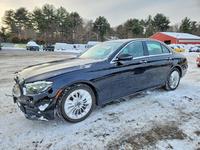
Mercedes-Benz E-Class photographed at a US vehicle auction
Auction lot photo, for illustration
Generations

Mercedes-Benz E-Class generations

Six generations since the 1994 model year. The W211 (2003–2009) has the most owner complaints, the W213 (2017–2023) the most recall campaigns (62).

6 / 6
2024–2026· Generation 6 of 6

W214 · 6th generation

EPA classMidsize Cars
EPA combined mpg22–28
NHTSA recalls7

Engines (EPA)

  • 2.0 L 4-cyl (turbo, mild hybrid) · 2024–2026
  • 3.0 L 6-cyl (turbo, supercharged, mild hybrid) · 2024–2026
  • 3.0 L 6-cyl (turbo, plug-in hybrid) · 2025–2026

Drive & transmission (EPA)

  • AWD/4WD, RWD
  • automatic (2024–2026)

Known issues to check

Electrical system (15)Steering (4)Forward collision avoidance (4)3 high-risk recall campaigns

Mentions in 27 NHTSA complaints.

Sample VIN pattern · W214W1KLF4HB?RA······NHTSA vPIC decodes it as a 2024 Mercedes-Benz E-Class E350 4MATIC/E350 4-M Turbo, built in Sindelfingen, Germany
Check an E-Class VIN

Sources: EPA · NHTSA · vPIC

NHTSA campaign data

Which E-Class model years each recall covers

NHTSA data

NHTSA has 100 campaigns on file for E-Class model years 1994–2026, and the 2019 shows up in more of them than any other year (22), ahead of the 2017 (20). Move the line to your model year to see which apply.

2024
Air bag inflator, fire risk or do-not-drive/park-outside advisorySafety recallCanada only
Pick a row
What to ask

Source: NHTSA recall database, vehicle campaigns only; row text is NHTSA’s summary. A listed year does not mean every car is covered, so check the VIN.

Canada rows: Transport Canada recalls database. Transport Canada recalls that match an NHTSA campaign are folded into that row by VinNumber.net; rows with the Canadian flag have no NHTSA match. Contains information licensed under the Open Government Licence – Canada · Transport Canada.

Owner reports · NHTSA complaints

What Mercedes-Benz E-Class owners report

Owner summaries + NHTSA data

Complaints peak with the 2006 (536 of 5,338). Tap any bar or generation.

5,338NHTSA complaints, 1994–2026
201mention a crash
108mention a fire
223injuries reported
Owner complaints by model yearW214: 27 complaints · most for the 2024 (12)

Top complaint areas · W214

Mentions in 27 complaints, 2024–2026.

Electrical system15
Steering4
Forward collision avoidance4
Powertrain (transmission, driveline)4
Speed control / acceleration3
Exterior lighting2
Crashes 0Fires 0Injuries 1

2024–2026 (W214)

NHTSA data summary

Its first model year, the 2024, drew more complaints than any other (12 of 27). Owners across the generation name electrical system most often (15 mentions), then steering (4).

What E-Class owners report across recent generations

Owner summary

2010–2016 (4th generation, W212)

The 2014 draws the most complaints. NHTSA owners of the 2014 most often describe brake problems and rear subframe and brake line corrosion, while owners of the 2011 mostly mention air bag recalls and frame rust. CarComplaints lists failed engine mounts and an oil pump failure for the 2010 E350, a fuel odor after filling up for 2011, and coolant mixing with transmission fluid for 2014. Recalls cover front air bag inflators on 2010–2014 E350 models and the driver air bag clockspring on 2012–2016 E350 models. [1] [2] [3] [4] [5]

What to check before buying

  • Run the VIN through the NHTSA recall lookup, including the air bag inflator and clockspring recalls.
  • Put the car on a lift and check the rear subframe and brake lines for corrosion.
  • Ask for engine mount, oil pump and transmission repair records.
  • On the drive, test the brakes, feel for vibration at idle and note any fuel smell after a fill-up.
Sources (5) and method
Sources:
  1. NHTSA recalls and owner complaints, 2014 Mercedes-Benz E-Class
  2. NHTSA recalls and owner complaints, 2011 Mercedes-Benz E-Class
  3. CarComplaints.com, 2010 Mercedes-Benz E350 problems
  4. CarComplaints.com, 2011 Mercedes-Benz E350 problems
  5. CarComplaints.com, 2014 Mercedes-Benz E350 problems

Counts: NHTSA complaints file, records to October 1, 2026, one count per complaint; areas are NHTSA component groups.

Owner summary updated September 25, 2026.

Owner complaints · by model year

E-Class complaint breakdown by model year

NHTSA data

Hybrid, plug-in and diesel E-Class versions count alongside gas ones. Tap a year to see its top systems.

5,338complaints, 1994–2026
201mention a crash
108mention a fire
223injuries reported
3complaints report a death
Most complaints: 2006 (536), 2005 (527), 2004 (481)
’95’00481’04527’05536’06’10’15’20’25

2006 · 536 complaints

Crashes 18 · fires 9 · injuries 22 · complaints reporting a death 1

Fuel/propulsion system184
Fuel system120
Service brakes74
Engine51
Power train39

Systems as NHTSA names them; a complaint can list several. Source: NHTSA complaints data, records to October 1, 2026.

EPA fuel economy & emissions

E-Class CO₂, smog rating and yearly fuel cost

EPA data

EPA lists 317 E-Class versions for model years 1994–2026 (gas, diesel, hybrid and plug-in hybrid). The lowest tailpipe CO₂ is 115 g/mi, for the 2026 plug-in hybrid. Pick a model year and powertrain to see each version.

W1241994–1995

16–25 mpg · CO₂ 407–555 g/mi

W2101996–2002

17–27 mpg · CO₂ 377–523 g/mi

W2112003–2009

14–27 mpg · CO₂ 377–635 g/mi

W2122010–2016

15–26 mpg · CO₂ 336–592 g/mi

W2132017–2023

18–26 mpg · CO₂ 336–509 g/mi

W2142024–2026

22–28 mpg · plug-in hybrid counted on gas alone · 56–60 MPGe plug-in hybrid · CO₂ 115–355 g/mi

2025
28combined MPG
316CO₂ grams per mile (tailpipe)
$2,950EPA yearly fuel cost
7/10Smog rating
1 = worst · 10 = cleanest
6/10Greenhouse gas rating
California LEV-III SULEV20 · Federal Tier 3 Bin 20Emission standard
Best (lowest) CO₂ by model year
10020030040050019952000200520102015202020251994 · Gas: 4681995 · Gas: 4441996 · Gas: 4681997 · Gas: 4441998 · Gas: 4231999 · Gas: 4232000 · Gas: 4232001 · Gas: 4232002 · Gas: 4232003 · Gas: 4442004 · Gas: 4442005 · Gas: 4442006 · Gas: 4442007 · Gas: 4682008 · Gas: 4682009 · Gas: 4682010 · Gas: 4232011 · Gas: 4442012 · Gas: 3862013 · Gas: 3852014 · Gas: 3732015 · Gas: 3772016 · Gas: 3772017 · Gas: 3512018 · Gas: 3512019 · Gas: 3572020 · Gas: 3362021 · Gas: 3492022 · Gas: 3422023 · Gas: 3421995 · Diesel: 4071996 · Diesel: 3771997 · Diesel: 3921998 · Diesel: 3921999 · Diesel: 3922005 · Diesel: 3772006 · Diesel: 3772007 · Diesel: 3922008 · Diesel: 3922009 · Diesel: 3922013 · Hybrid: 3362014 · Hybrid: 3362015 · Hybrid: 3502019 · Hybrid: 3702020 · Hybrid: 3702021 · Hybrid: 3412022 · Hybrid: 3482023 · Hybrid: 3432024 · Hybrid: 3272025 · Hybrid: 3162026 · Hybrid: 3162025 · Plug-in hybrid: 1172026 · Plug-in hybrid: 115
GasDieselHybridPlug-in hybrid

Annual fuel cost is EPA’s estimate at its current fuel-price assumptions (15,000 miles a year, 55% city driving), so older years are priced at today’s fuel prices. Smog rating and emission standard can differ by sales area (federal vs. California); both are shown. Greenhouse-gas ratings start with the 2013 model year. Plug-in hybrids: mpg is on gas alone; MPGe combines gas and electricity. Source: fueleconomy.gov.

Compare rivals

E-Class vs BMW 5 Series vs Audi A6

NHTSA + EPA data

Take 2017–2023. NHTSA lists 62 recall campaigns for the E-Class, against 20 for the BMW 5 Series and 19 for the Audi A6. Pick a range to compare.

Mercedes-Benz E-ClassW214

Model years 2024–2026

NHTSA recall campaigns
7
NHTSA owner complaints
27
EPA combined mpg
22–28
Engines (EPA)
4-cyl 2.0 L · 6-cyl 3.0 L
Also listed
turbo, mild hybrid, supercharged, plug-in hybrid
Drive (EPA)
AWD/4WD, RWD

Most-reported complaint areas (NHTSA)

  1. Electrical system 15
  2. Steering 4
  3. Forward collision avoidance 4

BMW 5 Series

Model years 2024–2026

NHTSA recall campaigns
10
NHTSA owner complaints
21
EPA combined mpg
24–31
Engines (EPA)
4-cyl 2.0 L · 6-cyl 3.0 L
Also listed
turbo, mild hybrid, plug-in hybrid
Drive (EPA)
AWD/4WD, RWD

Most-reported complaint areas (NHTSA)

  1. Brakes 14
  2. Electronic stability control 8
  3. Forward collision avoidance 4

Audi A6

Model years 2024–2026

NHTSA recall campaigns
3
NHTSA owner complaints
20
EPA combined mpg
23–26
Engines (EPA)
4-cyl 2.0 L · 6-cyl 3.0 L
Also listed
turbo, mild hybrid
Drive (EPA)
AWD/4WD

Most-reported complaint areas (NHTSA)

  1. Forward collision avoidance 12
  2. Electrical system 7
  3. Powertrain (transmission, driveline) 4

NHTSA recalls (vehicle campaigns for all powertrain versions; equipment and tire campaigns left out), complaints (not sales-adjusted) and 5-Star overall ratings for the latest year rated for all three; EPA mpg, engines and drive. Rivals: same EPA class, picked by VinNumber.net.

Mercedes-Benz E-Class VIN number location

Where to find the VIN on an E-Class

Tap a spot. Every location should show the same 17 characters.

Black Mercedes-Benz E-Class (fifth generation) sedan, front three-quarter view, with the VIN locations marked

Photo: Hans Haase, CC BY-SA 3.0, cropped

Illustration: VinNumber.net

Photo: Charles from Port Chester, New York, CC BY 2.0; edited and VIN pins added by VinNumber.net

Locate the E-Class VIN on the dashboard plate through the driver's side windshield. The door jamb sticker, trunk lid label, and engine bay stamp near the firewall complete the four standard locations. On W213 generation (2017+) vehicles, a spare tire well label is also present. The W214 generation starts with the 2024 model year; the VIN’s 10th character (R for 2024) shows which side of that line a car falls on.

  1. Windshield plateRead it through the glass at the base of the driver's side windshield.
    Source: 49 CFR 565.13(f) (NHTSA): VIN inside the passenger compartment, readable through the glazing next to the left windshield pillar
  2. Door jamb labelOpen the driver's door: the certification label on the B-pillar lists the VIN.
    Source: 49 CFR 567.4 (NHTSA): certification label with VIN at the driver door hinge pillar, latch post or door edge
The title, registration and insurance card show the VIN as well. All locations should match.
FAQ

Common Mercedes-Benz E-Class VIN questions

Which Mercedes-Benz E-Class model years have the most owner complaints?

The 2006 leads with 536, ahead of the 2005 (527) and 2004 (481). Those first two alone make up 20% of the 5,338 E-Class complaints filed with NHTSA, not adjusted for sales.

How many recalls has the Mercedes-Benz E-Class had?

NHTSA’s recall records show 100 vehicle campaigns for model years 1994–2026, leaving out equipment and tire campaigns. By generation, W213 leads with 62. Then come the W212 (21), W211 (10), W214 (7), W210 (3) and W124 (1), and a campaign can span two generations.

Which Mercedes-Benz E-Class recalls are high risk?

16V-081, 16V-363 and 17V-017 cover air bag inflators that can rupture. 18V-043, 19V-010 and 17V-080 cover air bag inflator modules and how they deploy. NHTSA’s record names a fire risk in 12V-557, 15V-088, 14V-762, 15V-792, 16V-899, 15V-351, 15V-505, 16V-831 and 11 more. Do-not-drive advisories came with 24V-941. Each should show as closed on a VIN check.

Which E-Class generation am I looking at?

By US model year, the W124 is 1994–1995 and the W210 1996–2002. W211 spans 2003–2009, W212 2010–2016, W213 2017–2023 and W214 2024–2026. Read the year off the VIN’s 10th character (R is 2024).

What fuel economy does the Mercedes-Benz E-Class get?

It varies. EPA rates the 2024–2026 W214 at 22–28 mpg combined, depending on engine and drive, with the plug-in hybrid counted on gas alone (56–60 MPGe on gas and electricity), up from 16–25 mpg for the 1994–1995 W124 (fueleconomy.gov).

How does the Mercedes-Benz E-Class compare with the BMW 5 Series and Audi A6 on recalls?

For 2024–2026 models the E-Class has 7 NHTSA recall campaigns. The BMW 5 Series has 10, the Audi A6 3. Complaints run 27, 21 and 20 in that order, with no sales adjustment.

What crash rating does the Mercedes-Benz E-Class have?

NHTSA’s 5-Star Safety Ratings give the 2023 E-Class 5 stars overall. Both rated versions, RWD and AWD, get that score.

Other Mercedes-Benz models

Check another Mercedes-Benz model

Related reading

Guides & alerts for used car buyers