About Tesla VIN Numbers
Tesla vehicles assembled in Fremont, California carry a 5YJ prefix. Model Y units built at Giga Texas in Austin carry a 7SA prefix. Tesla vehicles are among the most searched for VIN checks due to frequent ownership transfers, Autopilot-related accident claims, and battery condition questions that are reflected in insurance filings and state DMV records.
Tesla vehicles manufactured for the US market carry VIN prefixes of 5YJ (Fremont CA); 7SA (Austin TX); LRW (Shanghai, rare US imports). The VIN number encodes the country of manufacture (USA), production plant, vehicle line, body style, engine type, model year, and a unique production sequence number.
What a Tesla VIN Number Check Reveals
- Accident and collision history
- Odometer readings across all states
- Open safety recall status from NHTSA
- Title brands (salvage, flood, lemon law)
- Theft and recovery records
- Lien and ownership history
- Structural and frame damage reports
- Prior use (fleet, rental, taxi, auction)
About Tesla
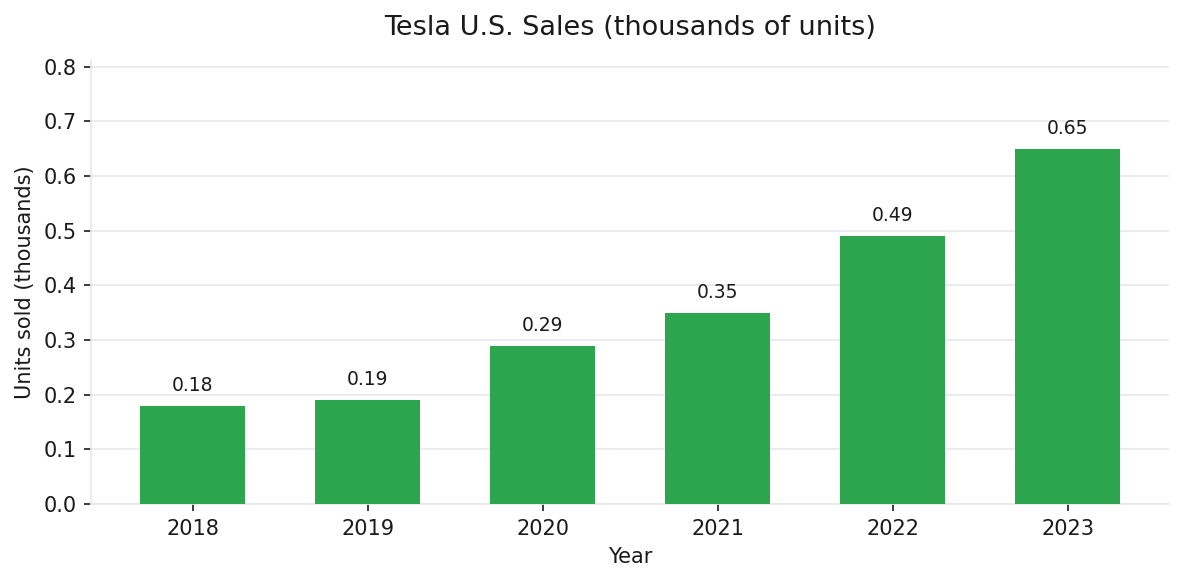
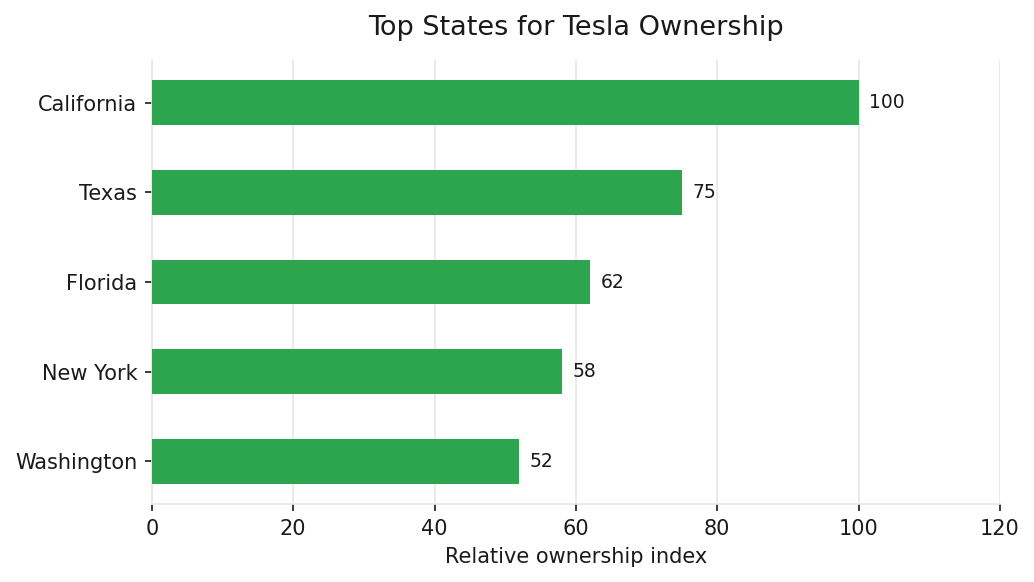
Tesla, the electric vehicle manufacturer, stands out as the only American car company to reach mass production since Chrysler emerged in 1925. This remarkable feat underscores the significant impact Tesla has had on the automotive industry, rewriting the rules of what an automaker can achieve in a century dominated by entrenched giants.
Not Founded by Musk (Mostly)
While Elon Musk is often synonymous with Tesla, the company was actually founded in 2003 by engineers Martin Eberhard and Marc Tarpenning. Their vision was primarily focused on proving that electric cars could be better than gasoline vehicles. Initially, Musk wasn't involved in the founding but became a crucial figure after leading Tesla's initial Series A funding round in February 2004. This investment marked the beginning of Musk's prominent and often controversial role within the company. Musk joined the board as chairman and has been instrumental in steering Tesla's strategic direction ever since.
The debut of the Tesla Roadster in 2008 marked a turning point for the company, as it demonstrated the viability of electric vehicles with impressive speed and range. It wasn't just an electric car; it was a statement that electric vehicles could be both desirable and technically advanced.
The Master Plan Unfolds
In August 2006, Elon Musk published a blog post titled "The Secret Tesla Motors Master Plan (just between you and me)." The plan outlined a straightforward strategy: build a sports car, use that money to build a more affordable car, and then build an even more affordable car while providing zero-emission electric power generation options. This vision was ambitious, yet Tesla pursued it with relentless determination.
The introduction of the Model S in 2012 revolutionized the industry's perception of electric cars. It was the first EV that appealed not just as a green alternative, but as a luxury vehicle that could compete with high-end gas-powered cars. With its long range and advanced features, the Model S set new standards for the electric vehicle market.
An integral part of Tesla's strategy was the development of the Supercharger network. These charging stations were strategically placed to enable Tesla drivers to travel long distances with minimal downtime. The network provided Tesla with a significant competitive advantage, removing a common barrier to EV adoption: range anxiety.
Model 3 and the Mass Market
The Model 3, launched in 2017, was Tesla's bid to capture the mass market. Priced to compete with mainstream sedans, it aimed to bring electric vehicles to a broader audience. The launch of the Model 3 was a critical test of Tesla's ability to scale production and manage mass-market demand.
Building on the "Master Plan," the Model 3 had to be not just affordable, but also truly compelling to succeed. Tesla's Gigafactories played a crucial role in this endeavor, bolstering production capacity and securing the required battery supply to meet growing demand.
Autopilot and Full Self-Driving (FSD) capabilities became a hallmark of Tesla's innovation. While still a work in progress, these features showcased Tesla's commitment to pushing the boundaries of automotive technology. The development of these systems has been both groundbreaking and contentious, highlighting the complex intersection of technology, safety, and regulation.
The unveiling of the Cybertruck in 2019 polarized opinions with its unconventional design. Love it or hate it, the Cybertruck exemplified Tesla's willingness to defy traditional automotive design norms and garnered significant public attention.
What Tesla Changed About Everything
Tesla's influence on the automotive industry is undeniable, spurring a global race among automakers to electrify their fleets. Traditional companies now find themselves scrambling to catch up with Tesla's innovation and market momentum. The shift towards electric vehicles has accelerated, thanks to Tesla's persistent drive to make electric cars the norm rather than the exception.
Notably, Tesla operates without conventional advertising and has no traditional dealership model, choosing instead to sell directly to consumers through its online platform. This approach has reshaped the car-buying experience, removing some of the hassles associated with traditional car dealerships.
As Tesla continues to innovate, it remains at the forefront of automotive technology, pushing the boundaries of what is possible in vehicle design and performance. From software updates to battery advancements, Tesla's influence is felt across the entire industry.
Why VIN History Matters for Tesla Buyers
For prospective Tesla buyers, understanding VIN history is crucial, yet traditional Carfax-style reports might not tell the complete story. Tesla vehicles often receive over-the-air software updates, meaning that the car's features and performance can change without any physical alterations. These updates, while beneficial, might not be fully reflected in the vehicle's VIN history.
Additionally, the health of the battery—a critical component in an electric vehicle—is not typically detailed in standard vehicle history reports. As the battery's condition directly impacts range and performance, it's vital for buyers to independently verify the battery health before purchasing a used Tesla.
Understanding these nuances ensures that buyers make informed decisions, recognizing not just the history of the car, but the unique aspects of Tesla's approach to automotive innovation.