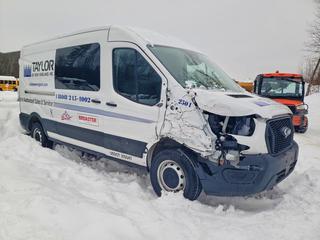
About the Ford Transit
The Ford Transit is the most commercially deployed van in the US market, used extensively by delivery companies, government agencies, contractors, and charter operators. Used Transits almost always carry commercial histories, and the range of prior use, from package delivery to food service to medical transport, significantly affects the condition and value of any individual unit.
A VIN number lookup on this Ford Transit includes real high-resolution auction photos sourced directly from Copart and IAAI, the largest salvage auction operators in the United States.
Production years: 2015-present
Body type: Full-size cargo/passenger van
What a Ford Transit VIN Check Reveals
A VIN number check on any Ford Transit pulls records from state DMV offices, NHTSA databases, insurance industry filings, and salvage auction records across all 50 states. The report covers the following data categories:
- Accident and collision history
- Full odometer timeline
- Open safety recalls from NHTSA
- Title brands (salvage, flood, lemon law, total loss)
- Theft and recovery records
- Lien and ownership history
- Structural and frame damage
- Airbag deployment records
- State inspection history
- Prior vehicle use (fleet, rental, taxi, auction)
Ford Transit VIN Number Location
Where to find the VIN on a Transit
Commercial Transit vans accumulate accident records faster than most vehicles due to constant fleet use. The VIN plate is at the base of the driver's side windshield. The door jamb sticker is sometimes covered or replaced when vans are repurposed between fleet operators. A more reliable secondary check is the firewall stamp inside the engine compartment, this is rarely disturbed during commercial refits.
The VIN also appears on the vehicle registration, insurance documents, and title. All locations should match. A mismatch between VIN plates is a potential indicator of a rebuilt or salvage vehicle.
Common Ford Transit Issues Found in VIN Reports
Transit high-roof variants show elevated roof damage claims from low-clearance collisions, one of the most common and underreported damage types for this body style. Engine mounts and transmission wear accumulate faster under commercial load cycles. Odometer discrepancy rates are higher for Transit than most other Ford models, reflecting multi-operator turnover across short ownership windows.
NHTSA Safety Recalls
Ford Transit — last 3 model years
What Transit owners report across recent generations
2015–present (1st generation)
The 2015 and 2016 draw the most complaints, and totals drop after 2017. NHTSA owners of the early vans often describe driveshaft vibration, transmission trouble and stalling. CarComplaints lists weak A/C, high pressure fuel pump failure and wheel bearing wear for 2015, and loss of power, premature brake wear and throttle body failure for 2016. Recalls cover the flexible coupling between the transmission and driveshaft on 2015–2017 vans, which may fail early, and rear camera connections on some 2020 models. [1] [2] [3] [4]
What to check before buying
Run the VIN through the NHTSA recall lookup, including the driveshaft coupling recalls on 2015 to 2017 vans. Ask for service records, since many of these vans worked in fleets. On the drive, feel for vibration when pulling away, listen for wheel bearing noise and check that the A/C cools well.
- NHTSA recalls and owner complaints, 2015 Ford Transit
- CarComplaints.com, 2015 Ford Transit problems
- NHTSA recalls and owner complaints, 2016 Ford Transit
- CarComplaints.com, 2016 Ford Transit problems
Updated September 25, 2026 · Summarized in our own words by VinNumber.net from public owner reports; individual experiences vary.