Run a free NHTSA vPIC decode on a Ford Explorer VIN to confirm the model year and engine, then see which of the 149 NHTSA recall campaigns for 1991–2026 cover that year.
VIN prefix1FM
Free decode plus the NHTSA recalls for its model year. 17 characters, no I, O or Q.
Ford Explorer
About the Ford Explorer
Ford has sold the Explorer in the US since the 1991 model year, and there have been six generations. The Gen 1 came first (1991–1994); Gen 2 (1995–2001), Gen 3 (2002–2005), Gen 4 (2006–2010), Gen 5 (2011–2019) followed, and the Gen 6 took over for 2020–2026. Across those years NHTSA lists 149 vehicle recall campaigns and 36,027 owner complaints. The 2002 has the most complaints of any model year (3,572). EPA rates the Gen 1 at 15–18 mpg combined, while the Gen 6, whose lineup includes hybrid versions, gets 19–28 mpg. A free VIN decode gives you NHTSA vPIC’s record for the car (model year, engine, plant) and the NHTSA recalls for its model year. It won’t show theft, flood or lemon-law history.
US model years1991–2026
GenerationsGen 1 · Gen 2 · Gen 3 · Gen 4 · Gen 5 · Gen 6
NHTSA recall campaigns149
Owner complaints36,027 at NHTSA
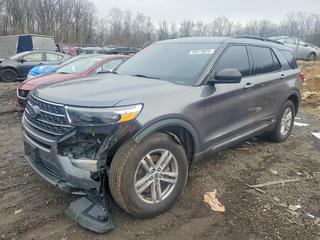
Auction lot photo, for illustration
Generations
Ford Explorer generations
Six generations since the 1991 model year. The Gen 5 (2011–2019) has the most owner complaints, the Gen 6 (2020–2026) the most recall campaigns (74).
NHTSA has 149 campaigns on file for Explorer model years 1991–2026, and the 2020 shows up in more of them than any other year (36), ahead of the 2021 (28). Move the line to your model year to see which apply.
2020
Air bag inflator, fire risk or do-not-drive/park-outside advisorySafety recallCanada only
Pick a row
What to ask
Source: NHTSA recall database, vehicle campaigns only; row text is NHTSA’s summary. A listed year does not mean every car is covered, so check the VIN.
Canada rows: Transport Canada recalls database. Transport Canada recalls that match an NHTSA campaign are folded into that row by VinNumber.net; rows with the Canadian flag have no NHTSA match. Contains information licensed under the Open Government Licence – Canada · Transport Canada.
Owner reports · NHTSA complaints
What Ford Explorer owners report
Owner summaries + NHTSA data
Complaints peak with the 2002 (3,572 of 36,027). Tap any bar or generation.
36,027NHTSA complaints, 1991–2026
1,976mention a crash
874mention a fire
2,554injuries reported
Owner complaints by model yearGen 6: 2,208 complaints · most for the 2020 (1,228)
The 2020 stands out. On its own it has 1,228 of the ’s 2,208 complaints (56%), and owners across the generation name powertrain most often (716 mentions), then electrical system (317).
Top complaint areas · Gen 5
Mentions in 12,957 complaints, 2011–2019.
Steering3,442
Structure and body3,087
Engine and cooling2,001
Powertrain (transmission, driveline)834
Electrical system821
Fuel system512
Crashes 244Fires 60Injuries 354
2011–2019 (Gen 5)
NHTSA data summary
Steering leads the list with 3,442 mentions, yet no other Explorer generation has it among its six most-mentioned areas. Of the nine model years, the 2016 (2,479) and 2013 (2,235) drew the most complaints.
Top complaint areas · Gen 4
Mentions in 1,299 complaints, 2006–2010.
Powertrain (transmission, driveline)472
Engine and cooling341
Electrical system138
Seats90
Brakes83
Speed control / acceleration76
Crashes 54Fires 20Injuries 53
2006–2010 (Gen 4)
NHTSA data summary
Its first model year, the 2006, drew more complaints than any other (635 of 1,299). Owners across the generation name powertrain most often (472 mentions), then engine and cooling (341).
Top complaint areas · Gen 3
Mentions in 6,822 complaints, 2002–2005.
Powertrain (transmission, driveline)2,613
Structure and body1,566
Suspension625
Engine and cooling454
Speed control / acceleration361
Electrical system361
Crashes 332Fires 107Injuries 401
2002–2005 (Gen 3)
NHTSA data summary
Complaints peak with the 2002, its first model year, at 3,572 of 6,822. Owners across the generation name powertrain most often (2,613 mentions), then structure and body (1,566).
Top complaint areas · Gen 2
Mentions in 9,348 complaints, 1995–2001.
Tires3,138
Speed control / acceleration1,121
Engine and cooling897
Powertrain (transmission, driveline)896
Suspension697
Brakes619
Crashes 956Fires 408Injuries 1,249
1995–2001 (Gen 2)
NHTSA data summary
Tires owns this generation. Its 3,138 mentions are more than twice the next area, speed control / acceleration (1,121). Complaints peak with the 1998 (2,085 of 9,348). No other generation’s complaints mention crashes as often as the ’s, at 956 of 9,348 (10.2%, against 5.5% across all Explorer model years).
Top complaint areas · Gen 1
Mentions in 3,393 complaints, 1991–1994.
Tires914
Brakes811
Structure and body357
Powertrain (transmission, driveline)335
Engine and cooling303
Electrical system251
Crashes 299Fires 259Injuries 396
1991–1994 (Gen 1)
NHTSA data summary
Fires come up in 259 complaints, or 7.6% against 2.4% for all Explorer model years, which is the highest rate of any generation. Complaints peak with the 1994 (1,207 of 3,393). Owners across the generation name tires most often (914 mentions), then brakes (811).
What Explorer owners report across recent generations
Owner summary
2020–present (6th generation)
The 2020 launch year drew heavy complaints, led by the 10-speed automatic. NHTSA owners describe hard downshifts, jerks when pulling away and complete transmission failures, along with rearview camera outages. CarComplaints ranks full transmission failure first for 2020, followed by brakes that did not work while moving forward and hard shifts. Recalls cover a rear axle mounting bolt that could fracture and disconnect the driveshaft on 2020–2022 models, and a park pawl on 2020–2021 models that could engage while moving. [1][2]
2011–2019 (5th generation)
Steering is the largest NHTSA complaint category for the 2013, with owners describing a sudden loss of power assist, and a recall covers an intermittent connection in the steering gear of some 2011–2013 models that can shut off the assist. On the 2016, many owners report exhaust fumes in the cabin and some fit carbon monoxide detectors, and others describe an internal water pump failure on the 3.5-liter V6. CarComplaints ranks bubbling paint and rust on the hood as the top 2013 problems, followed by exhaust odor in the cabin. A recall covers rear toe links on 2011–2017 models that may fracture. [3][4][5]
✓
What to check before buying
Run the VIN through the NHTSA recall lookup, including the rear toe link recall on 2011–2017 models and the rear axle bolt and park pawl recalls on 2020 and later models.
Ask for records of transmission repairs or software updates, water pump work on the 3.5-liter V6 and any exhaust odor fixes.
On the drive, feel for harsh shifts, test the rearview camera and check for exhaust smell with the windows up.
Counts: NHTSA complaints file, records to October 1, 2026, one count per complaint; areas are NHTSA component groups.
Owner summary updated September 25, 2026.
Owner opinions · Reddit
What Ford Explorer owners say on Reddit
Summarized from public threads
Explorer owners give the current generation a mixed report. Early 2020 and 2021 builds draw the most complaints, mainly harsh or slipping shifts from the 10-speed automatic plus electrical faults and leaks, and owners advise checking build dates and repair records. Trucks from 2022 on, and especially the 2025 refresh, get warmer reviews for power, space and tech. Even so, some owners of newer models describe engine or transmission replacements, and several recommend an extended warranty.
Pros
Plenty of power, with the ST singled out as fun to drive
Roomy three-row layout that handles road trips and snow well
2022 and newer, and the 2025 refresh, viewed as clear improvements
Cons
Transmission problems on early 2020 and 2021 builds
Electrical glitches, water leaks and sunroof issues
Some newer trucks still needed major engine or transmission work
EPA lists 280 Explorer versions for model years 1991–2026 (gas, hybrid and electric). The lowest tailpipe CO₂ is 322 g/mi, for the 2020 hybrid. Electric versions have none at the tailpipe. Pick a model year and powertrain to see each version.
Gen 11991–1994
15–18 mpg · CO₂ 494–592 g/mi
Gen 21995–2002
14–18 mpg · 39 MPGe electric · CO₂ 0–635 g/mi
Gen 32002–2005
14–17 mpg · CO₂ 523–635 g/mi
Gen 42006–2010
15–17 mpg · CO₂ 523–592 g/mi
Gen 52011–2019
18–23 mpg · CO₂ 386–500 g/mi
Gen 62020–2026
19–28 mpg · CO₂ 322–471 g/mi
2025
24combined MPG
377CO₂ grams per mile (tailpipe)
$2,800EPA yearly fuel cost
6/10Smog rating
1 = worst · 10 = cleanest
5/10Greenhouse gas rating
California LEV-III SULEV30 · Federal Tier 3 Bin 30Emission standard
Cleanest gas version of 2025: RWD · Auto 10-spd, 4 cyl, 2.3 L, Turbo — 24 MPG · 377 g/mi
Best (lowest) CO₂ by model year
GasHybridElectric
Annual fuel cost is EPA’s estimate at its current fuel-price assumptions (15,000 miles a year, 55% city driving), so older years are priced at today’s fuel prices. Smog rating and emission standard can differ by sales area (federal vs. California); both are shown. Greenhouse-gas ratings start with the 2013 model year. Source: fueleconomy.gov.
Compare rivals
Explorer vs Jeep Grand Cherokee vs Toyota Highlander
NHTSA + EPA data
Take 2006–2010. NHTSA lists 4 recall campaigns for the Explorer, against 13 for the Jeep Grand Cherokee and 20 for the Toyota Highlander. Pick a range to compare.
NHTSA recalls (vehicle campaigns for all powertrain versions; equipment and tire campaigns left out), complaints (not sales-adjusted) and 5-Star overall ratings for the latest year rated for all three; EPA mpg, engines and drive. Rivals: same EPA class, picked by VinNumber.net.
Ford Explorer VIN number location
Where to find the VIN on an Explorer
Tap a spot. Every location should show the same 17 characters.
The Explorer's VIN plate sits at the lower driver's side windshield. Older body-on-frame Explorers (pre-2011) have a frame rail stamp; post-2011 unibody versions rely on the B-pillar and cargo area secondary sticker instead. An additional VIN label sits on the B-pillar between the front and rear doors; check it against the door jamb sticker. The Gen 6 generation starts with the 2020 model year; the VIN’s 10th character (L for 2020) shows which side of that line a car falls on.
The title, registration and insurance card show the VIN as well. All locations should match.
FAQ
Common Ford Explorer VIN questions
Which Ford Explorer model years have the most owner complaints?
The 2002 leads with 3,572, ahead of the 2016 (2,479) and 2013 (2,235). Those first two alone make up 17% of the 36,027 Explorer complaints filed with NHTSA, not adjusted for sales.
How many recalls has the Ford Explorer had?
NHTSA’s recall records show 149 vehicle campaigns for model years 1991–2026, leaving out equipment and tire campaigns. By generation, Gen 6 leads with 74. Then come the Gen 5 (33), Gen 2 (28), Gen 1 (12), Gen 3 (7) and Gen 4 (4), and a campaign can span two generations.
Which Ford Explorer recalls are high risk?
NHTSA’s record names a fire risk in 91V-024, 91V-025, 97V-083, 09V-399, 98V-060, 06V-286, 07V-336, 03V-094 and 23 more. Each should show as closed on a VIN check.
Which Explorer generation am I looking at?
By US model year, the Gen 1 is 1991–1994 and the Gen 2 1995–2001. Gen 3 spans 2002–2005, Gen 4 2006–2010, Gen 5 2011–2019 and Gen 6 2020–2026. Read the year off the VIN’s 10th character (L is 2020).
What fuel economy does the Ford Explorer get?
It varies. EPA rates the 2020–2026 Gen 6 at 19–28 mpg combined, depending on engine and drive, up from 15–18 mpg for the 1991–1994 Gen 1 (fueleconomy.gov).
How does the Ford Explorer compare with the Jeep Grand Cherokee and Toyota Highlander on recalls?
For 2020–2026 models the Explorer has 74 NHTSA recall campaigns. The Jeep Grand Cherokee has 47, the Toyota Highlander 15. Complaints run 2,208, 2,253 and 1,374 in that order, with no sales adjustment.
What crash rating does the Ford Explorer have?
NHTSA’s 5-Star Safety Ratings give the 2025 Explorer 5 stars overall. Both rated versions, RWD and 4WD, get that score.