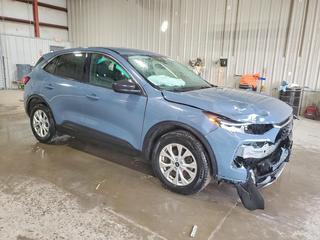
About the Ford Escape
The Ford Escape is one of the most commonly rented and leased compact SUVs in the US. Its frequency in commercial fleets means used examples often carry heavier histories than their appearance suggests, high-cycle rental wear, minor accidents filed under commercial policies, and accelerated wear patterns are common findings in VIN reports.
A VIN number lookup on this Ford Escape includes real high-resolution auction photos sourced directly from Copart and IAAI, the largest salvage auction operators in the United States.
Production years: 2001-2026
Body type: Compact SUV
Ford Escape Model Generations
What a Ford Escape VIN Check Reveals
A VIN number check on any Ford Escape pulls records from state DMV offices, NHTSA databases, insurance industry filings, and salvage auction records across all 50 states. The report covers the following data categories:
- Accident and collision history
- Full odometer timeline
- Open safety recalls from NHTSA
- Title brands (salvage, flood, lemon law, total loss)
- Theft and recovery records
- Lien and ownership history
- Structural and frame damage
- Airbag deployment records
- State inspection history
- Prior vehicle use (fleet, rental, taxi, auction)
Ford Escape VIN Number Location
Where to find the VIN on a Escape
Locate the VIN on the plate at the lower driver's side windshield corner. The B-pillar label between the front and rear doors is worth checking on Escapes coming off rental fleets, rental agencies sometimes apply asset barcodes adjacent to the VIN sticker, and these can obscure part of the number. The door jamb sticker carries the full 17-digit VIN along with tire pressure and GVWR data.
The VIN also appears on the vehicle registration, insurance documents, and title. All locations should match. A mismatch between VIN plates is a potential indicator of a rebuilt or salvage vehicle.
Common Ford Escape Issues Found in VIN Reports
Escape powertrains from the 1.6L EcoBoost era (2013-2016) had documented coolant intrusion and engine fire concerns that were the subject of major recall campaigns. The third generation (2020+) shows transmission hesitation claims at above-average rates. Rental fleet returns frequently show higher-than-typical brake wear and tire wear patterns that are not reflected in odometer readings.
NHTSA Safety Recalls
Ford Escape — last 3 model years
What Escape owners report across recent generations
2020–2026 (4th generation)
Structure is the largest NHTSA complaint category for the 2020, with many owners describing door trouble, including broken hinges and doors or windows that stop working properly, and CarComplaints ranks a door that will not shut because the hinge broke at a tack weld first for 2020, followed by loss of power steering. Recalls on the 1.5-liter engine cover fuel injectors that may crack and leak fuel and an oil separator housing that may crack, and hybrid models have a recall for engine failures that can release oil and fuel vapor near ignition sources. [1] [2]
2013–2019 (3rd generation)
Coolant trouble defines this generation. The 2013 with the 1.6-liter EcoBoost drew reports of overheating, coolant loss, stalling and engine fires, and CarComplaints notes it was recalled three times within months of launch, twice for fire risk. Recalls covered a fuel line that could split, a cylinder head plug that could dislodge and cylinder head overheating that could crack the head and leak oil. On the 2017, most NHTSA complaints mention coolant, with owners describing coolant leaking into the cylinders, misfires, white smoke and engine replacement. [3] [4] [5]
2008–2012 (2nd generation)
Power steering failure leads the complaints on the 2008. Steering accounts for about half of the NHTSA reports for that year, and a recall covers 2008–2011 Escapes whose steering torque sensor may fail to detect driver input and shut off the electric assist. CarComplaints ranks power steering failure first for 2008, followed by transmission failure and a failed transmission cooler, which it says has a technical service bulletin. Hybrid owners also file about a hundred complaints about brakes and ABS. [6] [7]
What to check before buying
Run the VIN through the NHTSA recall lookup, including the steering torque sensor recall on 2008–2011 models, the 1.6-liter engine recalls on 2013 models and the fuel injector recalls on 2020 and later 1.5-liter models. Ask for records of coolant leaks, head gasket or engine replacement and transmission work. On the drive, watch the temperature gauge, check for white exhaust smoke and test the steering and every door.
- NHTSA recalls and owner complaints, 2020 Ford Escape
- CarComplaints.com, 2020 Ford Escape problems
- NHTSA recalls and owner complaints, 2013 Ford Escape
- NHTSA recalls and owner complaints, 2017 Ford Escape
- CarComplaints.com, 2013 Ford Escape problems
- NHTSA recalls and owner complaints, 2008 Ford Escape
- CarComplaints.com, 2008 Ford Escape problems
Updated September 25, 2026 · Summarized in our own words by VinNumber.net from public owner reports; individual experiences vary.