About Hyundai VIN Numbers
Hyundai vehicles assembled in Montgomery, Alabama carry a 5NP prefix. Models imported from South Korea begin with KMH. Hyundai and its sister brand Kia have been subject to widespread engine failure recalls affecting Theta II engines used in Sonata and Santa Fe models, making VIN checks on these vehicles particularly relevant for buyers.
Hyundai vehicles manufactured for the US market carry VIN prefixes of 5NP, 5NM (US Alabama); KMH, KM8H (South Korea). The VIN number encodes the country of manufacture (South Korea), production plant, vehicle line, body style, engine type, model year, and a unique production sequence number.
Hyundai Models
What a Hyundai VIN Number Check Reveals
- Accident and collision history
- Odometer readings across all states
- Open safety recall status from NHTSA
- Title brands (salvage, flood, lemon law)
- Theft and recovery records
- Lien and ownership history
- Structural and frame damage reports
- Prior use (fleet, rental, taxi, auction)
About Hyundai
The $4,995 Car America Laughed At
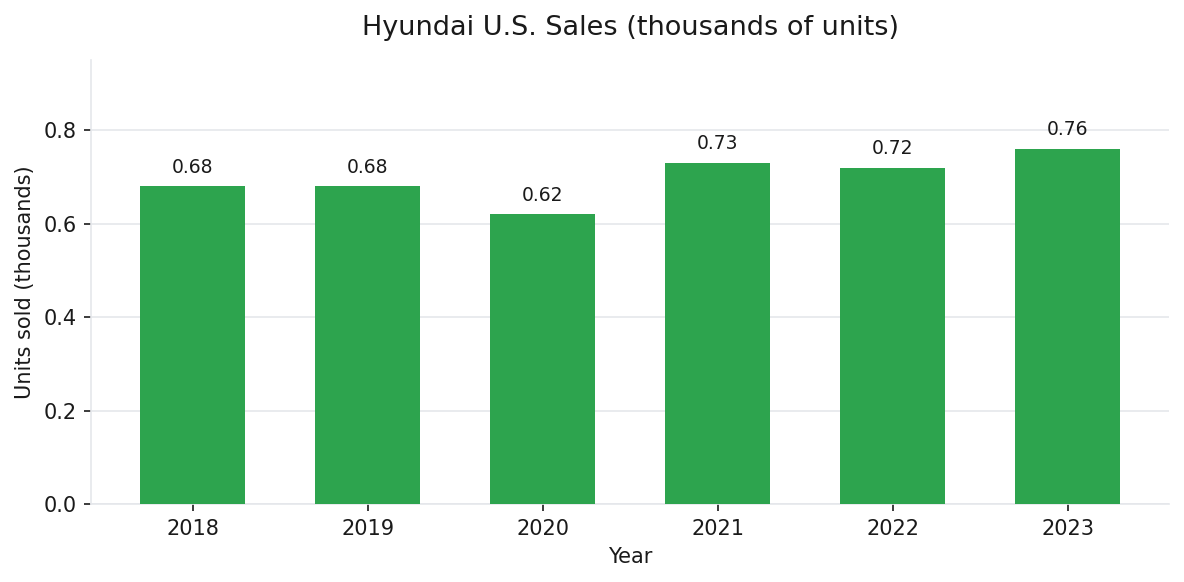
In 1986, Hyundai made its first foray into the United States with the introduction of the Hyundai Excel. Priced at just $4,995, it was the cheapest car on American roads at the time, and it quickly became the butt of jokes for its questionable quality. Despite its low price tag, Americans flocked to dealerships, drawn by the affordability of the Excel, and Hyundai sold more than 168,000 units in its first year. However, the initial enthusiasm soon waned as reports of mechanical issues and poor build quality began to circulate. The Excel's reputation for being unreliable threatened to derail Hyundai's ambitions in the lucrative American market.
The story of Hyundai's origins, however, began far from the shores of the United States. Founded by Chung Ju-yung in 1967, Hyundai Motor Company was born in South Korea with the aim of creating an automotive brand that could compete on the global stage. Despite its humble beginnings, Hyundai persevered, learning from its initial missteps and gradually improving its vehicles' quality and reliability.
The Warranty Bet That Paid Off
By the late 1990s, Hyundai was struggling with a tarnished reputation in America due to lingering perceptions of poor quality. In a bold move to recapture consumer trust, Hyundai introduced an industry-leading 10-year/100,000-mile warranty in 1998. This audacious gamble aimed to demonstrate Hyundai's newfound confidence in its vehicles' reliability and durability.
The gamble paid off. Customers began to take notice, and Hyundai's sales figures started to climb. The warranty alleviated fears about the cars' longevity and signaled a shift in the company's approach to quality control. Hyundai went from being perceived as a purveyor of cheap, unreliable cars to a brand that offered value and reassurance.
From Budget Brand to Award Winner
As Hyundai's vehicles improved, so did their market position. The company introduced models like the Sonata and Elantra, which became consistent best sellers, bolstering Hyundai's reputation as a reliable and affordable choice. The Sonata, a midsize sedan, struck a chord with American consumers thanks to its combination of style, performance, and value. The Elantra, a compact car, similarly gained a loyal following.
In the 2000s, Hyundai expanded its lineup to include the Santa Fe and Tucson SUVs, catering to the growing demand for crossovers and sport utility vehicles in the American market. These models quickly gained popularity, further solidifying Hyundai's status as a major player in the automotive world.
The creation of the Genesis luxury sub-brand marked another milestone for Hyundai. Initially launched as a premium model under the Hyundai banner, Genesis eventually became its own separate brand in 2015. This move underscored Hyundai's commitment to diversifying its offerings and competing with established luxury brands.
Hyundai's dedication to innovation and quality has not gone unnoticed. The Ioniq 5 and Ioniq 6, part of Hyundai's electric vehicle lineup, have won numerous global awards, showcasing the company's prowess in the rapidly evolving EV market. These accolades highlight Hyundai's transition from a once-mocked budget brand to an influential force in the automotive industry.
The Theft Crisis and Lessons Learned
While Hyundai has enjoyed significant success, the company has faced its share of challenges. One notable issue was a well-publicized theft epidemic that affected certain Hyundai models due to a missing engine immobilizer. This oversight made some vehicles easier targets for thieves, leading to a spike in thefts and a flurry of negative press.
Hyundai responded by addressing the security vulnerabilities and implementing measures to safeguard its vehicles. The incident served as a critical lesson in the importance of security features in modern cars and underscored the need for automakers to continuously adapt to evolving threats.
Why VIN History Matters for Hyundai Buyers
Given Hyundai's journey and the challenges it has faced, understanding the history of a vehicle through its Vehicle Identification Number (VIN) is crucial for prospective buyers. A VIN check can reveal important information about a car's past, including its security history and recall status.
For those considering a Hyundai, verifying the presence of security features like an engine immobilizer is essential. Additionally, staying informed about any past recalls or safety issues can provide peace of mind and ensure that the vehicle meets current safety standards.
Hyundai's remarkable rise from a struggling newcomer to a leader in the automotive world is a testament to its resilience and innovation. By taking steps to enhance quality, introduce groundbreaking warranty policies, and expand into new markets, Hyundai has transformed its image and secured its place among the top automakers globally. With a keen eye on the future, Hyundai continues to adapt and push the boundaries of what it means to be a modern car manufacturer.
```