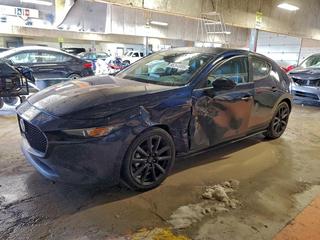
Mazda Mazda3 VIN Number Check

VIN prefix: JM1, JM3, 3MZ

Look up any Mazda Mazda3 by VIN — ownership history, collision claims, and open recalls.

Mazda Mazda3 Model Generations

BK 2004–2009
BL 2010–2013
BM 2014–2018
BP 2019–present

What a Mazda Mazda3 VIN Check Reveals

A VIN number check on any Mazda Mazda3 pulls records from state DMV offices, NHTSA databases, insurance industry filings, and salvage auction records across all 50 states. The report covers the following data categories:

  • Accident and collision history
  • Full odometer timeline
  • Open safety recalls from NHTSA
  • Title brands (salvage, flood, lemon law, total loss)
  • Theft and recovery records
  • Lien and ownership history
  • Structural and frame damage
  • Airbag deployment records
  • State inspection history
  • Prior vehicle use (fleet, rental, taxi, auction)

Mazda Mazda3 VIN Number Location

Where to find the VIN on a Mazda3

The Mazda3's VIN sits at the base of the driver's side windshield. Door jamb sticker and a trunk lid label near the latch are secondary locations. Sedan and hatchback variants carry the same primary VIN location but differ in secondary label positions, the hatchback has no trunk lid label, substituting a cargo area sticker instead. Mazda3 is a common rideshare vehicle in urban markets, and VIN checks often surface commercial use records.

The VIN also appears on the vehicle registration, insurance documents, and title. All locations should match. A mismatch between VIN plates is a potential indicator of a rebuilt or salvage vehicle.

Common Issues Found in VIN Reports for the Mazda Mazda3

VIN history reports on used Mazda Mazda3 vehicles frequently show accident and collision claims, title discrepancies, and odometer irregularities. Any open NHTSA recall notices tied to the specific VIN will appear in the report, along with the recall completion status where that data is available.

Mazda vehicles carrying a VIN prefix of JM1, JM3, 3MZ are traceable through all 50 state DMV systems and the National Motor Vehicle Title Information System (NMVTIS). Coverage for vehicles registered after 1990 is generally comprehensive.

NHTSA Safety Recalls

Mazda Mazda3 — last 3 model years

Loading NHTSA recall data…

What Mazda3 owners report across recent generations

2019–present (4th generation)

Owner data is thin, with about 70 NHTSA complaints for 2019 and fewer for later years. CarComplaints ranks transmission failure first for 2019, followed by auto headlight faults, and NHTSA owners mention brake and stalling concerns. Recalls cover automatic braking on 2019–2020 models that can falsely detect an obstacle and brake, lug nuts on some 2019 models that may loosen and engine software on 2019 models that may cause a stall. [1] [2]

2014–2018 (3rd generation)

Complaint counts are moderate. CarComplaints ranks brakes locking up first for 2014, followed by premature brake wear and infotainment crashes, and NHTSA owners of the 2014 describe an electric parking brake that fails to hold. Recalls cover parking brake calipers on 2014–2016 models that can corrode and bind, fuel tank valves on some 2014–2016 models that may leak fuel and rear camera images on 2014–2018 models that may not display properly. [3] [4]

2010–2013 (2nd generation)

The 2010 draws by far the most complaints. Most NHTSA owners describe a dashboard that turns sticky or shiny in the heat and leaves a glare on the windshield, while CarComplaints highlights clutch failure on the 2010. Recalls cover liftgate support struts on 2010–2013 hatchbacks that may corrode and let the liftgate drop and manual seat height lifters on 2010–2011 models that may break. [5] [6]

What to check before buying

Run the VIN through the NHTSA recall lookup, including the liftgate strut, parking brake and automatic braking recalls. On a 2010 to 2013, check the dashboard surface for stickiness or glare. On the drive, test the parking brake on a slope, feel for a slipping clutch or rough automatic shifts and watch for false automatic braking alerts.

Check Another Mazda Model