About Mercedes-Benz VIN Numbers
Mercedes-Benz vehicles manufactured in Germany carry VIN prefixes beginning with WDB, WDC, or WDD. GLE and GLS SUVs assembled in Tuscaloosa, Alabama carry a 4JG prefix. Late-model Mercedes vehicles are frequent subjects of VIN checks due to the premium attached to certified pre-owned claims, and odometer manipulation has been documented on European gray-market imports.
Mercedes-Benz vehicles manufactured for the US market carry VIN prefixes of WDB, WDC, WDD, 4JG. The VIN number encodes the country of manufacture (Germany), production plant, vehicle line, body style, engine type, model year, and a unique production sequence number.
What a Mercedes-Benz VIN Number Check Reveals
- Accident and collision history
- Odometer readings across all states
- Open safety recall status from NHTSA
- Title brands (salvage, flood, lemon law)
- Theft and recovery records
- Lien and ownership history
- Structural and frame damage reports
- Prior use (fleet, rental, taxi, auction)
About Mercedes-Benz
The First Automobile
Karl Benz is credited with inventing the world's first true automobile in 1885. His creation, the Benz Patent-Motorwagen, was a three-wheeled vehicle powered by an internal combustion engine. This invention set the stage for the automotive industry and positioned Benz as a pioneer in the field.
Fast forward to 1926, and we see the merger of Benz & Cie with Daimler-Motoren-Gesellschaft to form what is now known as Mercedes-Benz. This union brought together two automotive giants and paved the way for a legacy of innovation and luxury.
Safety as a Selling Point
Mercedes-Benz has a long history of pioneering safety features that have become standard in the automotive industry. The company introduced the concept of crumple zones in the 1950s, which are designed to absorb impact energy in a collision, protecting occupants. In the late 1970s, Mercedes-Benz was among the first to introduce antilock braking systems (ABS) to passenger cars. This technology allows drivers to maintain control during hard braking, significantly reducing the risk of accidents.
Airbags, another crucial safety feature, were first offered by Mercedes-Benz in the early 1980s. Since then, the brand has continued to innovate in safety, cementing its reputation as a leader in the field. The S-Class, Mercedes-Benz's flagship model, often serves as the technology showcase for the entire industry. New safety technologies are frequently introduced in the S-Class before trickling down to other models.
AMG: When the Engineers Took Over
AMG, the high-performance division of Mercedes-Benz, has its roots as a modest racing engine workshop. Founded by former Mercedes engineers in 1967, AMG initially focused on improving engine performance for racing applications. Over time, the partnership with Mercedes-Benz evolved, and AMG became synonymous with high-powered, performance-oriented versions of Mercedes vehicles.
Models like the AMG GT and C63 have become icons in their own right, offering thrilling performance without sacrificing the luxury and refinement Mercedes-Benz is known for. AMG's influence extends beyond just power figures, as their vehicles also feature sport-tuned suspensions, aggressive styling, and bespoke interior materials.
A Century of American Presence
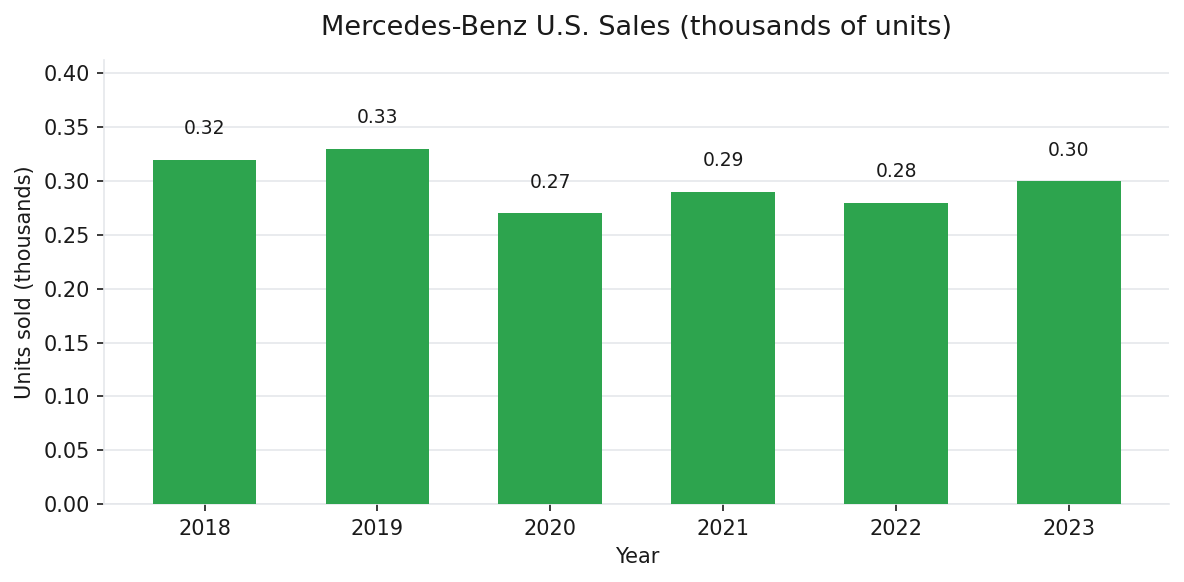
Mercedes-Benz has had a significant presence in the United States for over a century. The company's commitment to the American market is evident through its Alabama manufacturing plant, which began producing SUVs in the late 1990s. This facility currently produces popular models like the GLE and GLS, catering to the American appetite for luxurious and capable SUVs.
Throughout its history, the brand has also been known for its mainstay models like the C-Class and E-Class sedans. These vehicles have served as the backbone of Mercedes-Benz's sales, offering a blend of luxury, performance, and practicality that appeals to a wide range of consumers.
The 300SL Gullwing is one of the most iconic cars ever produced by Mercedes-Benz. Introduced in the 1950s, its distinctive upward-opening doors and sleek design captured the imaginations of car enthusiasts worldwide. Even today, the 300SL remains a symbol of automotive excellence and timeless design.
In recent years, Mercedes-Benz has made significant strides in the electric vehicle market with its EQ lineup. The EQ models represent the future of the brand, combining cutting-edge electric powertrains with the luxury and innovation customers have come to expect from Mercedes-Benz.
Why VIN History Matters for Mercedes-Benz Buyers
While Mercedes-Benz vehicles are renowned for their luxury and advanced technology, potential buyers should be aware of certain considerations, especially when purchasing used models. Luxury cars from Mercedes-Benz often depreciate sharply once the initial warranty period expires. This can make them attractive options on the used car market, but they also frequently come with hidden issues.
Used Mercedes vehicles can have unreported accident histories or deferred high-cost maintenance. Checking the VIN history before purchasing a used Mercedes-Benz can provide valuable insights into the vehicle's past, helping buyers make informed decisions and avoid potential pitfalls.
Overall, Mercedes-Benz's legacy of innovation and luxury continues to shine, making it a prestigious brand with a loyal following. Understanding its history and ensuring thorough research, including VIN checks, can help buyers enjoy everything these exceptional vehicles have to offer.
```