About the Ford F-150
The Ford F-150 has been the best-selling vehicle in the United States for over four decades. Its sheer volume in the used market means that buyers encounter a wide range of history profiles — from well-maintained personal trucks to heavily worked fleet units, theft recoveries, and flood-damaged vehicles from Gulf Coast markets.
Production years: 1975-present
Body type: Full-size pickup truck
What a Ford F-150 VIN Check Reveals
A VIN number check on any Ford F-150 pulls records from state DMV offices, NHTSA databases, insurance industry filings, and salvage auction records across all 50 states. The report covers the following data categories:
- Accident and collision history
- Full odometer timeline
- Open safety recalls from NHTSA
- Title brands (salvage, flood, lemon law, total loss)
- Theft and recovery records
- Lien and ownership history
- Structural and frame damage
- Airbag deployment records
- State inspection history
- Prior vehicle use (fleet, rental, taxi, auction)
Ford F-150 VIN Number Location
Where to find the VIN on a F-150
As one of the most stolen and most frequently totaled trucks in the US, the F-150 carries its primary VIN on a riveted plate at the base of the driver's side dashboard, visible through the windshield. The frame rail near the front axle carries a stamped number — critical after the 2015 switch to aluminum body panels, since collision repairs often replace cab sections without transferring all VIN stamps. Cross-check the door jamb sticker and frame stamp: a mismatch signals a rebuilt or cloned title.
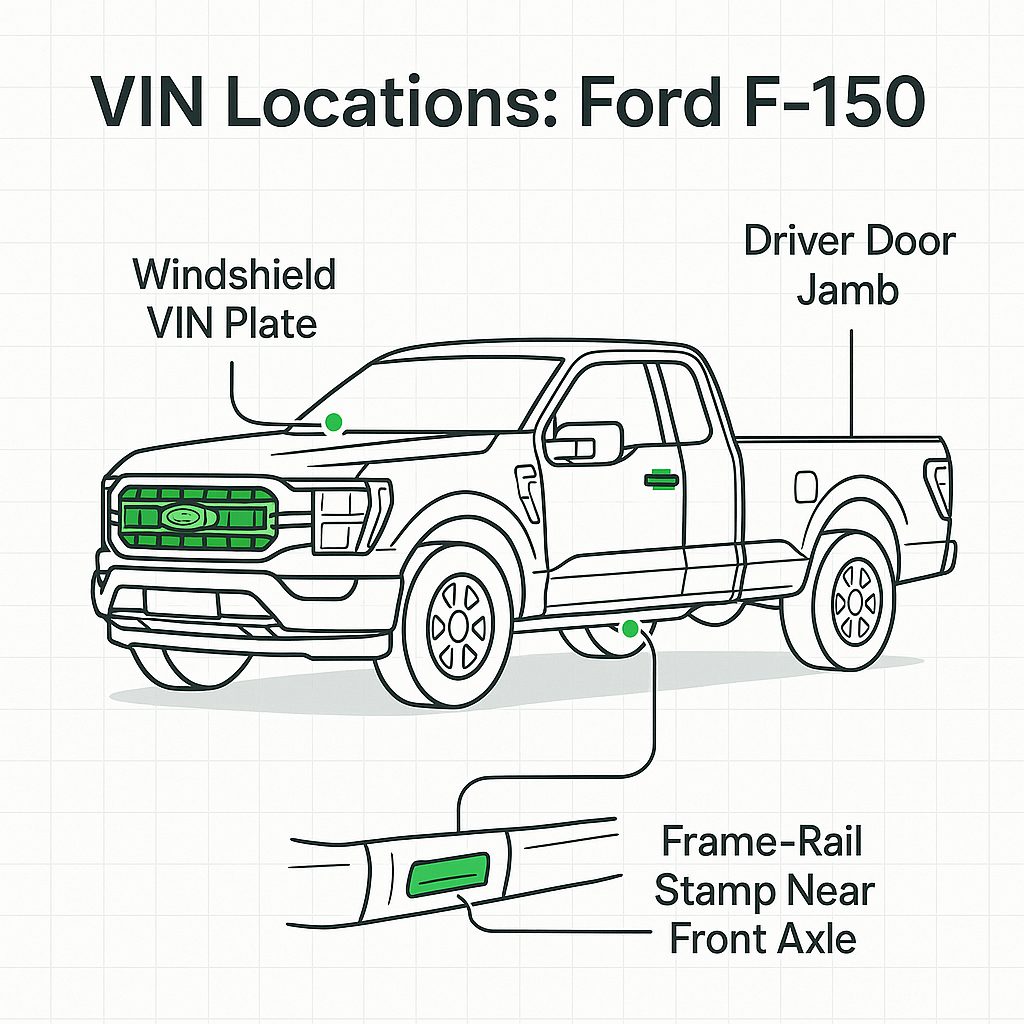
The VIN also appears on the vehicle registration, insurance documents, and title. All locations should match. A mismatch between VIN plates is a potential indicator of a rebuilt or salvage vehicle.
Common Ford F-150 Issues Found in VIN Reports
F-150 trucks from northern states frequently show rust and frame corrosion claims in VIN history reports. The 2015-2017 EcoBoost engines had documented timing chain issues, and vehicles from these years are worth checking for related recall completion. Tailgate theft is also common on F-150s, and a VIN check will surface any structural damage claims filed after theft-related vandalism. Flood damage appears regularly on units from Texas and Louisiana markets.
What Can Happen When You Skip the VIN Check on a Ford F-150
A buyer in Houston, Texas found a 2016 Ford F-150 listed at $11,500 with 18,000 miles. Before signing anything, they ran a VIN check and found two accident claims on file, including a structural repair completed at a body shop in 2017. The listing had described the vehicle as accident-free. The buyer brought the report to the dealer, who confirmed the repairs but could not provide documentation of the structural work.