Decode a Ford Ranger VIN free with NHTSA vPIC. See its generation and the NHTSA recalls for that model year, then read what owners have reported.
VIN prefix1FT
Free decode plus the NHTSA recalls for its model year. 17 characters, no I, O or Q.
Ford Ranger
About the Ford Ranger
Ford has sold the Ranger in the US since the 1990 model year, and there have been five generations. The Gen 2 came first (1990–1992); Gen 3 (1993–1997), Gen 4 (1998–2011), Gen 5 (2019–2023) followed, and the Gen 6 took over for 2024–2026. Across those years NHTSA lists 85 vehicle recall campaigns and 8,199 owner complaints. Complaints pile up on the Gen 4. Its 1999 and 2000 model years alone account for 1,437 of them, with owners bringing up air bags most often and structure and body after that. EPA rates the Gen 2 at 16–23 mpg combined, while the Gen 6 gets 17–23 mpg. A free VIN decode gives you NHTSA vPIC’s record for the car (model year, engine, plant) and the NHTSA recalls for its model year. It won’t show theft, flood or lemon-law history.
US model years1990–2026
GenerationsGen 2 · Gen 3 · Gen 4 · Gen 5 · Gen 6
NHTSA recall campaigns85
Owner complaints8,199 at NHTSA
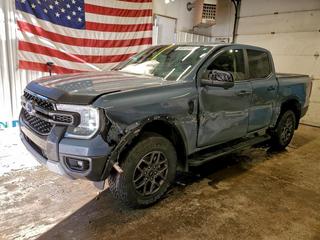
Auction lot photo, for illustration
Generations
Ford Ranger generations
Five generations since the 1990 model year. The Gen 4 (1998–2011) has both the most owner complaints and the most recall campaigns (35).
NHTSA has 85 campaigns on file for Ranger model years 1990–2026, and the 2024 and 2025 show up in the most (13 each). Move the line to your model year to see which apply.
2025
Air bag inflator, fire risk or do-not-drive/park-outside advisorySafety recallCanada only
Pick a row
What to ask
Source: NHTSA recall database, vehicle campaigns only; row text is NHTSA’s summary. A listed year does not mean every car is covered, so check the VIN.
Canada rows: Transport Canada recalls database. Transport Canada recalls that match an NHTSA campaign are folded into that row by VinNumber.net; rows with the Canadian flag have no NHTSA match. Contains information licensed under the Open Government Licence – Canada · Transport Canada.
Owner reports · NHTSA complaints
What Ford Ranger owners report
Owner summaries + NHTSA data
Complaints peak with the 1999 (760 of 8,199). Tap any bar or generation.
8,199NHTSA complaints, 1990–2026
764mention a crash
241mention a fire
722injuries reported
Owner complaints by model yearGen 6: 132 complaints · most for the 2024 (84)
The 2024 stands out. On its own it has 84 of the ’s 132 complaints (64%), and owners across the generation name powertrain most often (50 mentions), then electrical system (36).
Top complaint areas · Gen 5
Mentions in 568 complaints, 2019–2023.
Powertrain (transmission, driveline)223
Electrical system70
Engine and cooling67
Brakes47
Visibility (glass, wipers, mirrors)38
Speed control / acceleration31
Crashes 28Fires 7Injuries 121
2019–2023 (Gen 5)
NHTSA data summary
Powertrain owns this generation. Its 223 mentions are more than twice the next area, electrical system (70). Complaints peak with the 2019, its first model year, at 268 of 568.
Top complaint areas · Gen 4
Mentions in 5,255 complaints, 1998–2011.
Air bags1,810
Structure and body604
Tires598
Suspension440
Powertrain (transmission, driveline)407
Speed control / acceleration380
Crashes 510Fires 101Injuries 422
1998–2011 (Gen 4)
NHTSA data summary
Of all Ranger complaints, 64% are for the . Complaints peak with the 1999 (760 of 5,255). Owners across the generation name air bags most often (1,810 mentions), then structure and body (604).
Top complaint areas · Gen 3
Mentions in 1,815 complaints, 1993–1997.
Brakes307
Tires233
Fuel system198
Powertrain (transmission, driveline)171
Visibility (glass, wipers, mirrors)157
Electrical system143
Crashes 190Fires 65Injuries 142
1993–1997 (Gen 3)
NHTSA data summary
By area, nothing stands out. Brakes lead with 307, with the tires (233) and the fuel system (198) close behind. Of the five model years, the 1994 (438) and 1996 (413) drew the most complaints.
Top complaint areas · Gen 2
Mentions in 426 complaints, 1990–1992.
Electrical system88
Suspension55
Visibility (glass, wipers, mirrors)51
Engine and cooling50
Tires45
Powertrain (transmission, driveline)39
Crashes 31Fires 68Injuries 34
1990–1992 (Gen 2)
NHTSA data summary
Fires come up in 68 complaints, or 16.0% against 2.9% for all Ranger model years, which is the highest rate of any generation. Complaints peak with the 1992 (189 of 426). Owners across the generation name electrical system most often (88 mentions), then suspension (55).
What Ranger owners report across recent generations
Owner summary
2019–2023 (4th generation)
The 10-speed automatic draws the most NHTSA complaints for the 2019, with owners describing harsh shifts, hunting for gears, surging and some complete transmission failures. CarComplaints ranks sensors that fail repeatedly first for 2019, followed by complete transmission failure and paint chipping on new trucks. Recalls on 2019 trucks cover a shift lever that can leave Park without the brake pressed and an HVAC blower motor that may short, and another covers front passenger seat belts on 2019–2021 SuperCab trucks. [1][2]
1998–2011 (3rd generation)
Owner trouble on the late years of this long-running generation is modest. On the 2008, nearly all NHTSA complaints concern the air bag inflator recalls rather than new failures. CarComplaints lists air conditioning that will not shut off, shuddering windows and no heat as the top 2008 problems. Recalls cover driver and passenger air bag inflators on 2007–2011 trucks and replacement inflators that may have been installed on 2004–2011 trucks. [3][4]
✓
What to check before buying
Run the VIN through the NHTSA recall lookup, including the air bag inflator recalls on 2004–2011 trucks and the shift lever, blower motor and seat belt recalls on 2019–2021 trucks.
Ask for transmission service or repair records on 2019 and later trucks.
On the drive, feel for harsh or hunting shifts, check that the heater and A/C switch on and off normally and look for frame rust on older trucks.
EPA lists 256 Ranger versions for model years 1990–2026 (gas and electric). The lowest tailpipe CO₂ is 370 g/mi (2011). Electric versions have none at the tailpipe. Pick a model year and powertrain to see each version.
Gen 21990–1992
16–23 mpg · CO₂ 386–555 g/mi
Gen 31993–1997
16–22 mpg · CO₂ 404–555 g/mi
Gen 41998–2011
15–24 mpg · 47–58 MPGe electric · CO₂ 0–592 g/mi
Gen 52019–2023
18–23 mpg · CO₂ 387–486 g/mi
Gen 62024–2026
17–23 mpg · CO₂ 380–525 g/mi
2025
23combined MPG
380CO₂ grams per mile (tailpipe)
$2,900EPA yearly fuel cost
6/10Smog rating
1 = worst · 10 = cleanest
5/10Greenhouse gas rating
California LEV-III SULEV30 · Federal Tier 3 Bin 30Emission standard
Cleanest gas version of 2025: 2WD · Auto (S10), 4 cyl, 2.3 L, Turbo — 23 MPG · 380 g/mi
Best (lowest) CO₂ by model year
GasElectric
Annual fuel cost is EPA’s estimate at its current fuel-price assumptions (15,000 miles a year, 55% city driving), so older years are priced at today’s fuel prices. Smog rating and emission standard can differ by sales area (federal vs. California); both are shown. Greenhouse-gas ratings start with the 2013 model year. Source: fueleconomy.gov.
Compare rivals
Ranger vs Toyota Tacoma vs Chevrolet Colorado
NHTSA + EPA data
Take 2024–2026. NHTSA lists 24 recall campaigns for the Ranger, against 7 for the Toyota Tacoma and 4 for the Chevrolet Colorado. Pick a range to compare.
NHTSA recalls (vehicle campaigns for all powertrain versions; equipment and tire campaigns left out), complaints (not sales-adjusted) and 5-Star overall ratings for the latest year rated for all three; EPA mpg, engines and drive. Rivals: same EPA class, picked by VinNumber.net.
Ford Ranger VIN number location
Where to find the VIN on a Ranger
Tap a spot. Every location should show the same 17 characters.
Photo: HJUdall, CC0; edited and VIN pins added by VinNumber.net
Locate the Ranger's VIN plate through the lower driver's side windshield. The door jamb sticker and cab corner behind the door are two more check points. The Ranger also carries a frame rail stamp on the driver's side near the front axle; check it against the dashboard plate. The Gen 6 generation starts with the 2024 model year; the VIN’s 10th character (R for 2024) shows which side of that line a car falls on.
The title, registration and insurance card show the VIN as well. All locations should match.
FAQ
Common Ford Ranger VIN questions
Which Ford Ranger model years have the most owner complaints?
The 1999 leads with 760, ahead of the 2000 (677) and 1998 (582). Those first two alone make up 18% of the 8,199 Ranger complaints filed with NHTSA, not adjusted for sales.
How many recalls has the Ford Ranger had?
NHTSA’s recall records show 85 vehicle campaigns for model years 1990–2026, leaving out equipment and tire campaigns. By generation, Gen 4 leads with 35. Then come the Gen 6 (24), Gen 5 (18), Gen 3 (6) and Gen 2 (5), and a campaign can span two generations.
Which Ford Ranger recalls are high risk?
15V-322, 16V-036, 17V-787, 17V-788, 16V-384 and 17V-024 cover air bag inflators that can rupture. 23V-125, 23V-306, 18V-022, 18V-023, 21V-158, 18V-046 and 19V-001 cover air bag inflator modules and how they deploy. NHTSA’s record names a fire risk in 94V-111, 09V-399, 07V-336, 97V-186, 98V-201, 04V-331, 11V-126, 19V-726 and 6 more. Do-not-drive advisories came with 17V-787, 17V-788, 18V-022, 18V-023, 16V-384, 17V-024, 18V-046, 19V-001 and 1 more. Each should show as closed on a VIN check.
Which Ranger generation am I looking at?
By US model year, the Gen 2 is 1990–1992 and the Gen 3 1993–1997. Gen 4 spans 1998–2011, Gen 5 2019–2023 and Gen 6 2024–2026. Read the year off the VIN’s 10th character (R is 2024).
What fuel economy does the Ford Ranger get?
It varies. EPA rates the 2024–2026 Gen 6 at 17–23 mpg combined, depending on engine and drive, up from 16–23 mpg for the 1990–1992 Gen 2 (fueleconomy.gov).
How does the Ford Ranger compare with the Toyota Tacoma and Chevrolet Colorado on recalls?
For 2024–2026 models the Ranger has 24 NHTSA recall campaigns. The Toyota Tacoma has 7, the Chevrolet Colorado 4. Complaints run 132, 257 and 164 in that order, with no sales adjustment.