Honda Accord VIN Number Check

VIN prefix: 1HG, 2HG, 3HH, 5FN, JHM

One VIN search on a Honda Accord covers accident filings, title records, and recall status.

About the Honda Accord

Honda Accord at auction
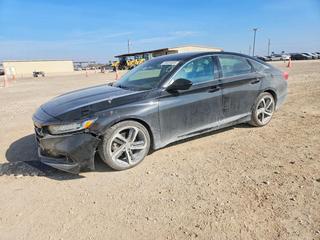
View Real Auction Photos — Honda Accord

Police theft reports consistently rank 1990s and early 2000s Accords among the most stolen vehicles nationwide, a pattern that persists decades after production. This 1976-present mainstay also dominates fleet and rental service, meaning used buyers encounter everything from clean one-owner cars to theft recoveries and rebuilt collision titles.

A VIN number lookup on this Honda Accord includes real high-resolution auction photos sourced directly from Copart and IAAI, the largest salvage auction operators in the United States.

Honda Accord Model Generations

1 1976–1981
2 1982–1985
3 1986–1989
4 1990–1993
5 1994–1997
6 1998–2002
7 2003–2007
8 2008–2012
9 2013–2017
10 2018–2022
11 2023–present

What a Honda Accord VIN Check Reveals

A VIN number check on any Honda Accord pulls records from state DMV offices, NHTSA databases, insurance industry filings, and salvage auction records across all 50 states. The report covers the following data categories:

  • Accident and collision history
  • Full odometer timeline
  • Open safety recalls from NHTSA
  • Title brands (salvage, flood, lemon law, total loss)
  • Theft and recovery records
  • Lien and ownership history
  • Structural and frame damage
  • Airbag deployment records
  • State inspection history
  • Prior vehicle use (fleet, rental, taxi, auction)

Honda Accord VIN Number Location

Where to find the VIN on a Accord

As a frequent target for odometer fraud, the Accord's VIN appears on a plate at the lower driver's side windshield, on the door jamb sticker, and on a label inside the trunk lid near the latch. A VIN check will surface the full odometer history regardless of what the instrument cluster currently reads, particularly relevant for Accords coming off high-mileage lease returns where odometer fraud has occasionally been documented.

The VIN also appears on the vehicle registration, insurance documents, and title. All locations should match. A mismatch between VIN plates is a potential indicator of a rebuilt or salvage vehicle.

Common Issues Found in VIN Reports for the Honda Accord

VIN history reports on used Honda Accord vehicles frequently show accident and collision claims, title discrepancies, and odometer irregularities. Any open NHTSA recall notices tied to the specific VIN will appear in the report, along with the recall completion status where that data is available.

Honda vehicles carrying a VIN prefix of 1HG, 2HG, 3HH, 5FN, JHM are traceable through all 50 state DMV systems and the National Motor Vehicle Title Information System (NMVTIS). Coverage for vehicles registered after 1990 is generally comprehensive.

NHTSA Safety Recalls

Honda Accord — last 3 model years

Loading NHTSA recall data…

What Accord owners report across recent generations

2023–present (11th generation)

Owner data for this generation is still limited. Most NHTSA complaints for the 2023 concern the hybrid, with owners describing a sudden Brake System Problem warning, a loss of power and in some cases a stall, plus reports of stiff steering and electric parking brake warnings. CarComplaints has only about ten reports for 2023, led by phone connection problems, an emissions warning with reduced power and a car that would not turn on. Recalls cover front seat belt pretensioners missing a rivet and a driver seat cushion frame that may not be tightened. [1] [2]

2018–2022 (10th generation)

On the 2018, NHTSA complaints most often describe head gasket failure on the 1.5-liter turbo, with warning lights, rough running or the engine shutting off, some past 100,000 miles. Owners also report automatic emergency braking activating without reason. CarComplaints ranks gasoline in the oil first for 2018, followed by cracked windshields and dashboard rattles. Recalls cover a low pressure fuel pump that may fail on 2018–2019 cars and body control software on 2018–2020 cars that could disrupt the wipers, defroster, rearview camera or exterior lights. [3] [4]

2013–2017 (9th generation)

Steering is the largest NHTSA complaint category for the 2013, with owners describing the wheel pulling or turning on its own and the electric power steering cutting out. Starter and battery complaints are also common, and CarComplaints says 2013–2014 starters tend to fail soon after the 36,000 mile warranty ends, adding reports that the original battery struggles to start V6 cars. Recalls cover a battery sensor case that could let water in and short circuit, and driveshafts on 2013–2015 four-cylinder CVT cars sold or registered in certain states. [5] [6]

What to check before buying

Run the VIN through the NHTSA recall lookup, and on 2018–2019 cars confirm the fuel pump recall is done. On 1.5-liter turbo cars, ask for oil change records and any coolant loss or head gasket work, and smell the dipstick for fuel. On 2013–2014 cars, ask about starter and battery replacement. On the drive, look for warning lights, check the steering for pull and note whether automatic braking engages without reason.

Check Another Honda Model