A free NHTSA vPIC decode tells you which Honda Fit you are looking at. Then check its model year against 34 NHTSA recall campaigns and what owners have reported.
VIN prefixJHM3HG
Free decode plus the NHTSA recalls for its model year. 17 characters, no I, O or Q.
Honda Fit
About the Honda Fit
Honda sold the Fit in the US for model years 2007–2020, across three generations. Gen 1 first (2007–2008), then Gen 2 (2009–2013), and the Gen 3 took over for 2015–2020. Across those years NHTSA lists 34 vehicle recall campaigns and 2,194 owner complaints. The 2007 has the most complaints of any model year (370). EPA rates the Gen 1 at 29–31 mpg combined, while the Gen 3 gets 31–36 mpg. A free VIN decode gives you NHTSA vPIC’s record for the car (model year, engine, plant) and the NHTSA recalls for its model year. It won’t show theft, flood or lemon-law history.
US model years2007–2020
GenerationsGen 1 · Gen 2 · Gen 3
NHTSA recall campaigns34
Owner complaints2,194 at NHTSA
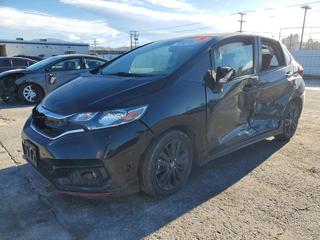
Auction lot photo, for illustration
Generations
Honda Fit generations
Three generations since the 2007 model year. The Gen 2 (2009–2013) has both the most owner complaints and the most recall campaigns (14).
NHTSA has 34 campaigns on file for Fit model years 2007–2020, and the 2010 shows up in more of them than any other year (12), ahead of the 2007 (11). Move the line to your model year to see which apply.
2019
Air bag inflator, fire risk or do-not-drive/park-outside advisorySafety recallCanada only
Pick a row
What to ask
Source: NHTSA recall database, vehicle campaigns only; row text is NHTSA’s summary. A listed year does not mean every car is covered, so check the VIN.
Canada rows: Transport Canada recalls database. Transport Canada recalls that match an NHTSA campaign are folded into that row by VinNumber.net; rows with the Canadian flag have no NHTSA match. Contains information licensed under the Open Government Licence – Canada · Transport Canada.
Owner reports · NHTSA complaints
What Honda Fit owners report
Owner summaries + NHTSA data
Complaints peak with the 2007 (370 of 2,194). Tap any bar or generation.
2,194NHTSA complaints, 2007–2020
149mention a crash
18mention a fire
145injuries reported
Owner complaints by model yearGen 3: 735 complaints · most for the 2015 (283)
2007··2010···2015····2020
Top complaint areas · Gen 3
Mentions in 735 complaints, 2015–2020.
Electrical system273
Fuel system169
Engine and cooling107
Powertrain (transmission, driveline)53
Structure and body50
Forward collision avoidance35
Crashes 31Fires 2Injuries 32
2015–2020 (Gen 3)
NHTSA data summary
The 2015 stands out. On its own it has 283 of the ’s 735 complaints (39%), and owners across the generation name electrical system most often (273 mentions), then fuel system (169).
Top complaint areas · Gen 2
Mentions in 872 complaints, 2009–2013.
Air bags384
Steering99
Powertrain (transmission, driveline)86
Electrical system83
Engine and cooling61
Structure and body39
Crashes 70Fires 8Injuries 67
2009–2013 (Gen 2)
NHTSA data summary
Air bags owns this generation. Its 384 mentions are more than twice the next area, steering (99). Complaints peak with the 2009, its first model year, at 287 of 872.
Top complaint areas · Gen 1
Mentions in 587 complaints, 2007–2008.
Air bags126
Structure and body107
Steering98
Exterior lighting83
Engine and cooling57
Powertrain (transmission, driveline)52
Crashes 48Fires 8Injuries 46
2007–2008 (Gen 1)
NHTSA data summary
By area, nothing stands out. Air bags lead with 126, with structure and body (107) and the steering (98) close behind. Its first model year, the 2007, drew more complaints than any other (370 of 587).
What Fit owners report across recent generations
Owner summary
2015–2020 (3rd generation)
The 2015 draws by far the most complaints. CarComplaints ranks uncomfortable seats first for 2015, followed by transmission failure and starter failure, and 2016 owners also report starter and fuel injector failures. NHTSA owners of the 2015 describe fuel injector, transmission and starting problems. Recalls cover transmission software on some 2015 models that could damage a drive pulley shaft, ignition coil wiring on some 2015 models that may overheat and stall the engine and curtain air bag brackets on some 2015–2016 LX models. [1][2][3]
2009–2013 (2nd generation)
The 2009 draws the most complaints. Many NHTSA owners describe the electric power steering suddenly turning heavy with a warning light, and many others concern Takata air bag recalls. CarComplaints owners of the 2009 report a spark plug blowing out of the cylinder head, clear coat wearing off and uncomfortable seats. Recalls cover passenger front air bag inflators on 2009–2012 models under the Takata campaigns, since those inflators may rupture in a crash. [4][5]
✓
What to check before buying
Run the VIN through the NHTSA recall lookup and confirm the Takata air bag repair on 2009 to 2012 models and the transmission and ignition coil recalls on 2015 models.
Sit in the car long enough to judge seat comfort.
On the drive, check that the steering stays light with no warning light, the engine starts cleanly and the CVT pulls smoothly.
EPA lists 41 Fit versions for model years 2007–2020 (gas and electric). The lowest tailpipe CO₂ is 246 g/mi (2020). Electric versions have none at the tailpipe. Pick a model year and powertrain to see each version.
Gen 12007–2008
29–31 mpg · CO₂ 287–306 g/mi
Gen 22009–2014
29–31 mpg · 118 MPGe electric · CO₂ 0–306 g/mi
Gen 32015–2020
31–36 mpg · CO₂ 246–286 g/mi
2020
36combined MPG
246CO₂ grams per mile (tailpipe)
$1,850EPA yearly fuel cost
7/10Smog rating
1 = worst · 10 = cleanest
8/10Greenhouse gas rating
California LEV-III SULEV30 · Federal Tier 3 Bin 30Emission standard
Cleanest gas version of 2020: Fit · Auto (variable gear ratios), 4 cyl, 1.5 L — 36 MPG · 246 g/mi
Best (lowest) CO₂ by model year
GasElectric
Annual fuel cost is EPA’s estimate at its current fuel-price assumptions (15,000 miles a year, 55% city driving), so older years are priced at today’s fuel prices. Smog rating and emission standard can differ by sales area (federal vs. California); both are shown. Greenhouse-gas ratings start with the 2013 model year. Source: fueleconomy.gov.
Compare rivals
Fit vs Toyota Corolla vs Nissan Versa
NHTSA + EPA data
Take 2009–2013. NHTSA lists 14 recall campaigns for the Fit, against 20 for the Toyota Corolla and 13 for the Nissan Versa. Pick a range to compare.
NHTSA recalls (vehicle campaigns for all powertrain versions; equipment and tire campaigns left out), complaints (not sales-adjusted) and 5-Star overall ratings for the latest year rated for all three; EPA mpg, engines and drive. Rivals: same EPA class, picked by VinNumber.net.
Honda Fit VIN number location
Where to find the VIN on a Fit
Tap a spot. Every location should show the same 17 characters.
Locate the Fit's VIN on the plate at the lower driver's side windshield. Inside the driver's door jamb, a sticker carries the full number. The door sill beneath the driver's door carries a secondary stamp on most trim levels. The Gen 3 generation starts with the 2015 model year; the VIN’s 10th character (F for 2015) shows which side of that line a car falls on.
The title, registration and insurance card show the VIN as well. All locations should match.
FAQ
Common Honda Fit VIN questions
Which Honda Fit model years have the most owner complaints?
The 2007 leads with 370, ahead of the 2009 (287) and 2015 (283). Those first two alone make up 30% of the 2,194 Fit complaints filed with NHTSA, not adjusted for sales.
How many recalls has the Honda Fit had?
NHTSA’s recall records show 34 vehicle campaigns for model years 2007–2020, leaving out equipment and tire campaigns. By generation, Gen 2 leads with 14. Then come the Gen 1 (11) and Gen 3 (11), and a campaign can span two generations.
Which Honda Fit recalls are high risk?
16V-344, 17V-029, 16V-061, 16V-346 and 17V-030 cover air bag inflators that can rupture. 18V-268, 19V-182, 19V-501, 17V-545, 18V-042, 19V-378, 19V-500, 19V-502 and 1 more cover air bag inflator modules and how they deploy. NHTSA’s record names a fire risk in 10V-033 and 13V-260. Each should show as closed on a VIN check.
Which Fit generation am I looking at?
By US model year, the Gen 1 is 2007–2008 and the Gen 2 2009–2013. Gen 3 spans 2015–2020. Read the year off the VIN’s 10th character (F is 2015).
What fuel economy does the Honda Fit get?
It varies. EPA rates the 2015–2020 Gen 3 at 31–36 mpg combined, depending on engine and drive, up from 29–31 mpg for the 2007–2008 Gen 1 (fueleconomy.gov).
How does the Honda Fit compare with the Toyota Corolla and Nissan Versa on recalls?
For 2015–2020 models the Fit has 11 NHTSA recall campaigns. The Toyota Corolla has 11, the Nissan Versa 9. Complaints run 735, 1,279 and 582 in that order, with no sales adjustment.
What crash rating does the Honda Fit have?
NHTSA’s 5-Star Safety Ratings give the 2020 Fit 5 stars overall. One version, FWD, is rated.