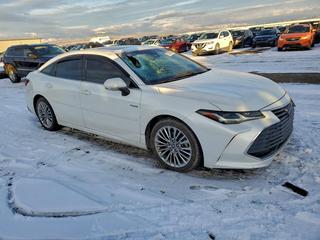
Toyota Avalon VIN Number Check

VIN prefix: 4T (cars/SUVs KY/IN); 5TF, 5TD (trucks TX); 2T (Canada); JT (Japan)

The Toyota Avalon VIN search shows accident claims the seller may have forgotten to mention.

About the Toyota Avalon

Toyota Avalon at auction
View Real Auction Photos — Toyota Avalon

Buyers looking at used Avalons encounter a split market: single-owner vehicles from retirees who averaged 8,000 highway miles annually, and former livery sedans that logged 50,000+ miles yearly in corporate car service. The VIN history distinguishes these dramatically different wear profiles, often revealing commercial registrations that sellers omit from listings.

A VIN number lookup on this Toyota Avalon includes real high-resolution auction photos sourced directly from Copart and IAAI, the largest salvage auction operators in the United States.

What a Toyota Avalon VIN Check Reveals

A VIN number check on any Toyota Avalon pulls records from state DMV offices, NHTSA databases, insurance industry filings, and salvage auction records across all 50 states. The report covers the following data categories:

  • Accident and collision history
  • Full odometer timeline
  • Open safety recalls from NHTSA
  • Title brands (salvage, flood, lemon law, total loss)
  • Theft and recovery records
  • Lien and ownership history
  • Structural and frame damage
  • Airbag deployment records
  • State inspection history
  • Prior vehicle use (fleet, rental, taxi, auction)

Toyota Avalon VIN Number Location

Where to find the VIN on a Avalon

Locate the Avalon's VIN on the metal plate at the lower driver's side windshield. The door jamb sticker and a trunk lid label near the latch are the secondary locations. Avalon was Toyota's flagship sedan and frequently served as a livery and town-car service vehicle, VIN reports on used examples often show commercial transportation use with higher-than-average odometer readings for the model year.

The VIN also appears on the vehicle registration, insurance documents, and title. All locations should match. A mismatch between VIN plates is a potential indicator of a rebuilt or salvage vehicle.

Common Issues Found in VIN Reports for the Toyota Avalon

VIN history reports on used Toyota Avalon vehicles frequently show accident and collision claims, title discrepancies, and odometer irregularities. Any open NHTSA recall notices tied to the specific VIN will appear in the report, along with the recall completion status where that data is available.

Toyota vehicles carrying a VIN prefix of 4T (cars/SUVs KY/IN); 5TF, 5TD (trucks TX); 2T (Canada); JT (Japan) are traceable through all 50 state DMV systems and the National Motor Vehicle Title Information System (NMVTIS). Coverage for vehicles registered after 1990 is generally comprehensive.

NHTSA Safety Recalls

Toyota Avalon — last 3 model years

Loading NHTSA recall data…

What Avalon owners report across recent generations

2019–2022 (5th generation)

Owner data is thin, with about 70 NHTSA complaints for 2019 and far fewer after. NHTSA owners of the 2019 mention stalling and fuel pump trouble, and CarComplaints owners report excessive oil consumption and blind spot monitor warnings. Recalls cover low pressure fuel pumps on some 2019–2020 models that may fail and stall the engine and air bag software on some 2019 models that may not deploy the air bags as intended. [1] [2]

2013–2018 (4th generation)

The 2013 draws the most complaints. Many NHTSA owners describe a rear window sunshade stuck in the raised position, a sagging headliner above the rear glass and a distorted rear window. CarComplaints ranks front seat backs coming loose first for 2013, followed by an A/C odor and coolant leaks. Recalls cover the pre-collision system on some 2013–2015 models that may brake for a steel plate in the road and air bag control units on 2012–2018 models that may fail in certain crashes. [3] [4]

2005–2012 (3rd generation)

Headlights and oil leaks lead this generation. On the 2008, most NHTSA complaints describe HID headlights going out while driving, and CarComplaints lists the same problem first for 2008, followed by a major oil leak. CarComplaints ranks a sudden loss of engine oil with no warning first for 2006, followed by a cracked dashboard. Recalls cover accelerator pedals on 2005–2010 models that may stick and pedals on some models that a floor mat can trap. [5] [6] [7]

What to check before buying

Run the VIN through the NHTSA recall lookup, including the accelerator pedal recalls on older cars, the air bag control unit recall on 2012 to 2018 models and the fuel pump recall on 2019 to 2020 models. On an older car, check for oil leaks and confirm both headlights stay on over bumps. On a 2013, test the rear sunshade and look through the rear window for distortion.

Check Another Toyota Model