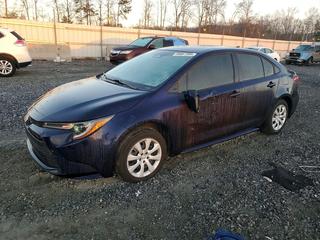
About the Toyota Corolla
Over 50 million Corollas have been sold worldwide since 1966, with US units routinely exceeding 200,000 miles before leaving the road. This exceptional longevity creates fertile ground for odometer fraud, rolled-back units can show 120,000 miles while hiding 220,000, and title washing schemes that resurrect total-loss vehicles across state lines.
A VIN number lookup on this Toyota Corolla includes real high-resolution auction photos sourced directly from Copart and IAAI, the largest salvage auction operators in the United States.
Toyota Corolla Model Generations
What a Toyota Corolla VIN Check Reveals
A VIN number check on any Toyota Corolla pulls records from state DMV offices, NHTSA databases, insurance industry filings, and salvage auction records across all 50 states. The report covers the following data categories:
- Accident and collision history
- Full odometer timeline
- Open safety recalls from NHTSA
- Title brands (salvage, flood, lemon law, total loss)
- Theft and recovery records
- Lien and ownership history
- Structural and frame damage
- Airbag deployment records
- State inspection history
- Prior vehicle use (fleet, rental, taxi, auction)
Toyota Corolla VIN Number Location
Where to find the VIN on a Corolla
As one of the most common used vehicles in North America, Corolla sees a high volume of VIN checks. The plate at the base of the driver's side windshield is the primary location, with a door jamb sticker and a trunk lid label near the latch as secondaries. Fleet-returned Corollas often show rental agency barcodes adjacent to the door jamb sticker, check for sticker replacement or residue from a previously applied asset tag.
The VIN also appears on the vehicle registration, insurance documents, and title. All locations should match. A mismatch between VIN plates is a potential indicator of a rebuilt or salvage vehicle.
Common Issues Found in VIN Reports for the Toyota Corolla
VIN history reports on used Toyota Corolla vehicles frequently show accident and collision claims, title discrepancies, and odometer irregularities. Any open NHTSA recall notices tied to the specific VIN will appear in the report, along with the recall completion status where that data is available.
Toyota vehicles carrying a VIN prefix of 4T (cars/SUVs KY/IN); 5TF, 5TD (trucks TX); 2T (Canada); JT (Japan) are traceable through all 50 state DMV systems and the National Motor Vehicle Title Information System (NMVTIS). Coverage for vehicles registered after 1990 is generally comprehensive.
NHTSA Safety Recalls
Toyota Corolla — last 3 model years
What Corolla owners report across recent generations
2020–present (12th generation)
The most common complaint on the 2020 is a failed coolant bypass valve. Many NHTSA reports link it to an Engine Maintenance Required message that will not clear, and owners object to the repair cost for what they see as a small part. Some manual transmission owners describe clutch slave cylinder trouble. CarComplaints has few reports for this generation, led by a sour air conditioning smell, a failed A/C condenser and excessive road and engine noise. Recalls cover rear seat belts on some 2020 cars and a passenger occupant sensor on 2020–2021 cars that can keep the air bag from deploying. [1] [2]
2014–2019 (11th generation)
Owner trouble on this generation looks light. NHTSA complaints for the 2014 are spread across air bags, electrical items and a handful of transmission reports, without one dominant failure. CarComplaints ranks air conditioning that does not work properly, a radio that stops working and dashboard rattles as the top 2014 problems. The key recall covers 2011–2019 Corollas whose air bag control unit may malfunction in certain crashes and disable the air bags or seat belt pretensioners. [3] [4]
2009–2013 (10th generation)
The 2009 draws the most complaints of this generation. NHTSA reports focus on air bags, steering that wanders or loses assist at highway speed, and unintended acceleration, and 2009–2010 cars were part of the accelerator pedal and floor mat recalls. CarComplaints ranks excessive oil consumption first for 2009, followed by water pump failure and a loud engine noise. Other recalls cover passenger air bag inflators and a power window master switch that could short circuit and overheat. [5] [6]
What to check before buying
Run the VIN through the NHTSA recall lookup, including the air bag control unit recall on 2011–2019 cars and the pedal, floor mat and air bag inflator recalls on 2009–2010 cars. On 2020 and later cars, ask whether the coolant bypass valve has been replaced and look for stored warnings. On older cars, ask about oil consumption and water pump work. On the drive, check that the steering tracks straight at highway speed and that the air conditioning blows cold without odors.
- NHTSA recalls and owner complaints, 2020 Toyota Corolla
- CarComplaints.com, 2020 Toyota Corolla problems
- NHTSA recalls and owner complaints, 2014 Toyota Corolla
- CarComplaints.com, 2014 Toyota Corolla problems
- NHTSA recalls and owner complaints, 2009 Toyota Corolla
- CarComplaints.com, 2009 Toyota Corolla problems
Updated September 25, 2026 · Summarized in our own words by VinNumber.net from public owner reports; individual experiences vary.