About the Toyota RAV4
Theft recovery databases flag the Toyota RAV4 among the top ten most-stolen vehicles annually, with VIN cloning schemes targeting its strong resale value. Buyers examining used RAV4s should cross-reference the dashboard VIN against door jamb and engine stamps, as cloned plates from legitimate vehicles frequently mask stolen or salvage-titled units.
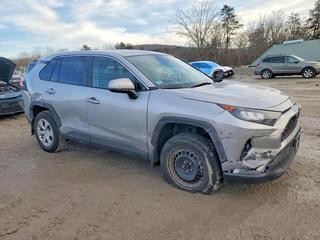
A VIN number lookup on this Toyota RAV4 includes real high-resolution auction photos sourced directly from Copart and IAAI, the largest salvage auction operators in the United States.
Toyota RAV4 Model Generations
What a Toyota RAV4 VIN Check Reveals
A VIN number check on any Toyota RAV4 pulls records from state DMV offices, NHTSA databases, insurance industry filings, and salvage auction records across all 50 states. The report covers the following data categories:
- Accident and collision history
- Full odometer timeline
- Open safety recalls from NHTSA
- Title brands (salvage, flood, lemon law, total loss)
- Theft and recovery records
- Lien and ownership history
- Structural and frame damage
- Airbag deployment records
- State inspection history
- Prior vehicle use (fleet, rental, taxi, auction)
Toyota RAV4 VIN Number Location
Where to find the VIN on a RAV4
As one of the most stolen SUVs in North America, the RAV4's VIN appears in three locations: the plate at the base of the driver's side windshield, the door jamb sticker, and a B-pillar label between the front and rear doors. On theft recoveries, the dashboard plate is often the first target for tampering, always cross-reference the B-pillar label, which is harder to access and replace.
The VIN also appears on the vehicle registration, insurance documents, and title. All locations should match. A mismatch between VIN plates is a potential indicator of a rebuilt or salvage vehicle.
Common Issues Found in VIN Reports for the Toyota RAV4
VIN history reports on used Toyota RAV4 vehicles frequently show accident and collision claims, title discrepancies, and odometer irregularities. Any open NHTSA recall notices tied to the specific VIN will appear in the report, along with the recall completion status where that data is available.
Toyota vehicles carrying a VIN prefix of 4T (cars/SUVs KY/IN); 5TF, 5TD (trucks TX); 2T (Canada); JT (Japan) are traceable through all 50 state DMV systems and the National Motor Vehicle Title Information System (NMVTIS). Coverage for vehicles registered after 1990 is generally comprehensive.
NHTSA Safety Recalls
Toyota RAV4 — last 3 model years
What RAV4 owners report across recent generations
2019–2025 (5th generation)
Owners of 2019–2020 models report two main problems. On gas models, the automatic transmission can hesitate, jerk or lurch at low speeds, which CarComplaints ranks as the top 2019 issue, and Reddit owners describe dealers applying a software update for it. Fuel system complaints lead NHTSA reports for the 2019, with many owners, often of the Hybrid, saying the tank takes far less fuel than rated and the gauge does not match the real level, a topic RAV4World owners also track. Recalls on 2019–2020 models covered cracking front lower suspension arms and water entering the power steering gear. [1] [2] [3] [4] [5] [6]
2013–2018 (4th generation)
This generation draws relatively few owner complaints. CarComplaints puts minor items at the top for 2013, such as a navigation screen that is hard to read in sunlight and a musty smell from the ventilation, along with some unintended acceleration reports. A recurring NHTSA theme on 2013 models is a shudder or vibration at low to moderate speeds that owners trace to the torque converter, and some mention a Toyota customer support program rather than a recall. A later recall covers 2013–2018 RAV4s whose replacement 12-volt battery may not fit the tray and could short circuit, creating a fire risk. [7] [8]
2006–2012 (3rd generation)
Oil consumption in the 2.4-liter four-cylinder is the most reported problem, concentrated on 2006–2008 models. CarComplaints names excessive oil consumption on the 2007 as the most-reported RAV4 problem of any year, with the 2008 close behind, and NHTSA complaints for the 2007 describe adding a quart or more between changes and engines that failed after running low. Steering is also a large complaint category for the 2007, with many reports of clunking. Recalls cover rear suspension arms on 2006–2011 models that could rust and fail if their alignment nuts were not tightened properly during service. [9] [10]
What to check before buying
Run the VIN through the NHTSA recall lookup to confirm the lower arm and power steering recalls on 2019–2020 models, the battery tray recall on 2013–2018 models and the rear suspension arm recalls on 2006–2011 models. Ask for records of transmission updates, fuel tank repairs on Hybrids and oil consumption repairs on older four-cylinders. On the drive, slow nearly to a stop and accelerate again to feel for a lurch, and hold a steady moderate speed to feel for shudder.
- NHTSA recalls and owner complaints, 2019 Toyota RAV4
- NHTSA recall 20V-286, 2019–2020 RAV4 front lower suspension arms
- r/rav4club thread, fix for 2019 gas RAV4 transmission hesitation and lurching
- r/rav4club thread, 2019 RAV4 XLE gas model transmission shifting update
- RAV4World thread, 2019–2020 Hybrid fuel tank fill-up issue and repairs
- CarComplaints.com, 2019 Toyota RAV4 problems
- NHTSA recalls and owner complaints, 2013 Toyota RAV4
- CarComplaints.com, 2013 Toyota RAV4 problems
- NHTSA recalls and owner complaints, 2007 Toyota RAV4
- CarComplaints.com, Toyota RAV4 problems by year
Updated September 25, 2026 · Summarized in our own words by VinNumber.net from public owner reports; individual experiences vary.