About the Ford Mustang
The Ford Mustang has been in continuous production since 1964, making it one of the longest-running nameplates in the American automotive market. It is also one of the most frequently appearing vehicles in salvage auction records, insurance claims databases, and rebuilt title filings. Used Mustangs move fast at auction and through private sales, and the gap between what a seller discloses and what a VIN report reveals is often significant.
Production years: 1964–present
Body type: Muscle car / sports car
What a Ford Mustang VIN Check Reveals
A VIN number check on any Ford Mustang pulls records from state DMV offices, NHTSA databases, insurance industry filings, and salvage auction records across all 50 states. The report covers the following data categories:
- Accident and collision history
- Full odometer timeline
- Open safety recalls from NHTSA
- Title brands (salvage, flood, lemon law, total loss)
- Theft and recovery records
- Lien and ownership history
- Structural and frame damage
- Airbag deployment records
- State inspection history
- Prior vehicle use (fleet, rental, taxi, auction)
Ford Mustang VIN Number Location
Where to find the VIN on a Mustang
Mustang has one of the highest salvage-rebuild rates of any American car. The primary VIN plate sits at the base of the driver's side windshield, but dashboard assemblies are commonly swapped on rebuilt titles. Always cross-reference the door jamb sticker, the firewall stamp in the engine compartment, and the rear axle tag — four locations that should carry identical numbers. On Shelby and GT500 variants, a secondary identification plate is riveted to the driver's door hinge pillar and is the hardest location to alter without visible tampering.
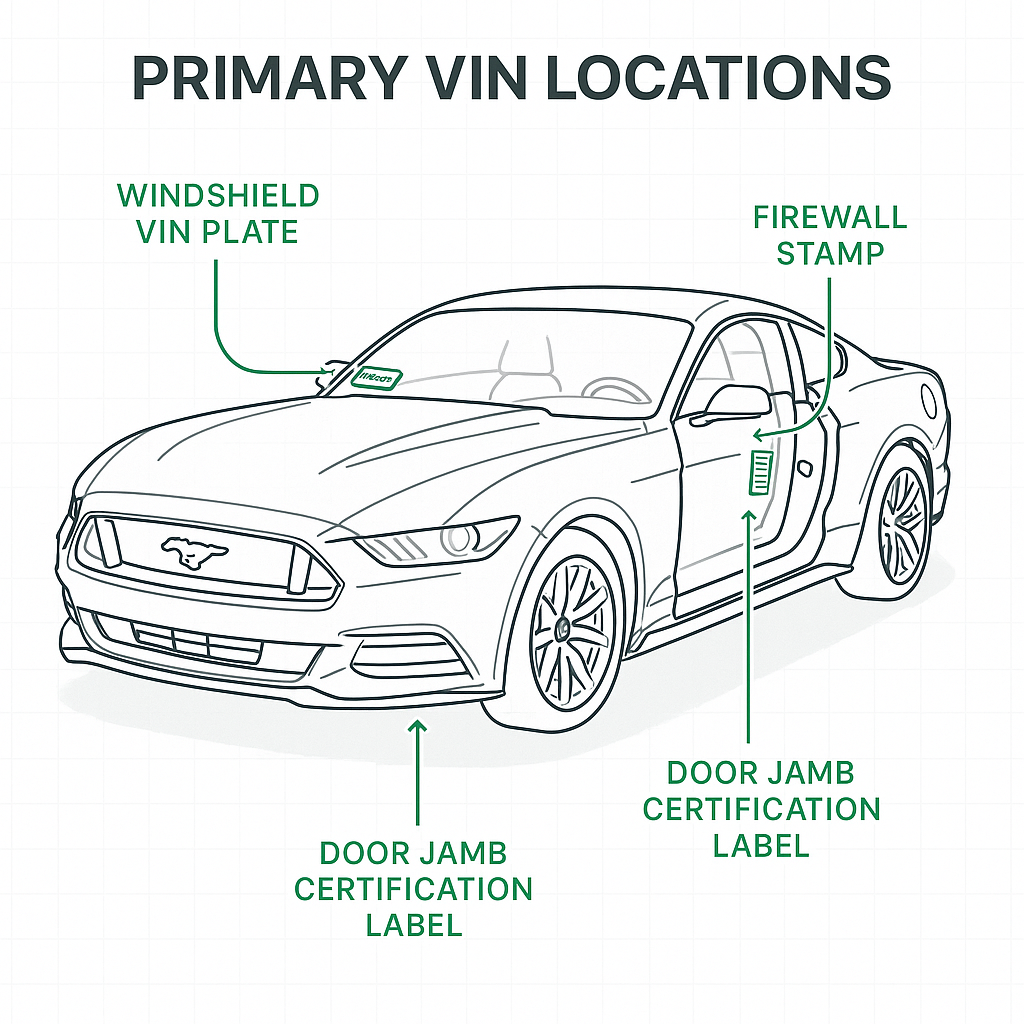
The VIN also appears on the vehicle registration, insurance documents, and title. All locations should match. A mismatch between VIN plates is a potential indicator of a rebuilt or salvage vehicle.
Common Ford Mustang Issues Found in VIN Reports
Mustangs rank among the highest accident claim rates of any vehicle in the US, driven by high-speed incidents, parking lot crashes at car meets, and a high rate of salvage title rebuilds. NHTSA data consistently places the Mustang in the top tier for collision frequency relative to its sales volume. GT Performance Package and Shelby variants frequently carry track use history that does not appear in the standard odometer record. EcoBoost four-cylinder variants from 2015 onward occasionally show turbocharger-related repair claims. Any used Mustang purchase should include a VIN report as a baseline step.
What Can Happen When You Skip the VIN Check on a Ford Mustang
After seeing a 2019 Ford Mustang advertised at $15,500 in San Antonio, Texas, a buyer pulled the VIN report before visiting. The report flagged flood damage from a prior registration in Louisiana, where the vehicle had been processed through an insurance claim after a regional storm event in 2020. The seller had not disclosed this. The buyer declined the purchase and reported the listing to the state DMV.