About Nissan VIN Numbers
Nissan vehicles assembled in Smyrna, Tennessee carry a 1N4 or 5N1 prefix. Models imported from Japan or Mexico begin with JN1, JN8, or 3N1. The Rogue and Altima, two of the most commonly traded used vehicles in the country, are frequent subjects of VIN number checks related to odometer discrepancies and salvage title questions.
Nissan vehicles manufactured for the US market carry VIN prefixes of 1N4, 3N1, JN1, JN8, 5N1. The VIN number encodes the country of manufacture (Japan), production plant, vehicle line, body style, engine type, model year, and a unique production sequence number.
Nissan Models
What a Nissan VIN Number Check Reveals
- Accident and collision history
- Odometer readings across all states
- Open safety recall status from NHTSA
- Title brands (salvage, flood, lemon law)
- Theft and recovery records
- Lien and ownership history
- Structural and frame damage reports
- Prior use (fleet, rental, taxi, auction)
About Nissan
Nissan's Identity Crisis and Comeback
Nissan has experienced its share of ups and downs, with a storied past that includes a celebrated sports car legacy and a controversial corporate scandal. Despite periods of uncertainty, Nissan is on a journey to redefine itself in the global auto industry.
From DAT to Datsun to Nissan
Nissan's roots trace back to the founding of DAT Motors in 1914. Originally specializing in trucks, DAT Motors eventually transitioned to passenger vehicles. By 1934, the company rebranded itself as Nissan Motor Co., Ltd., setting the stage for a broader market presence.
The brand Datsun emerged as Nissan's answer to affordable and stylish vehicles, especially in export markets. Datsun made a significant impact in the United States with models like the 510 and the 240Z, building a reputation for reliability and performance.
The Z Legend
The introduction of the Datsun 240Z in 1970 marked a turning point for Nissan in the sports car arena. This model offered European sports car looks and performance at a fraction of the cost. It quickly became a hit among American buyers, laying the foundation for Nissan's enduring Z-car legacy.
The Z lineage continued with successive models such as the 280ZX and 300ZX, each iteration pushing technological and performance boundaries. The modern revival of the 370Z continues to pay homage to its iconic predecessors.
Mainstream Hits and Misses
Beyond its sports cars, Nissan has had notable successes and missteps in its mainstream lineup. The Maxima, often dubbed the "four-door sports car," offered a blend of performance and practicality that resonated with many drivers.
In the 1990s, the Pathfinder became a household name, capitalizing on the growing popularity of SUVs. It combined rugged capability with a family-friendly interior, contributing to Nissan's robust sales during that era.
The Altima, introduced in the early 1990s, enjoyed a period of dominance in the mid-2000s. Its blend of comfort, efficiency, and style made it a strong contender in the competitive midsize sedan segment.
Nissan ventured into the electric vehicle market in 2010 with the Leaf, the world's first mass-market electric vehicle. The Leaf set the standard for affordable EVs and helped spark the global shift towards sustainable transportation.
The Ghosn Era and What Came After
Carlos Ghosn, a pivotal figure in Nissan's history, joined the company in the early 2000s. His cost-cutting measures and strategic moves revived Nissan from near bankruptcy, propelling it into a period of growth.
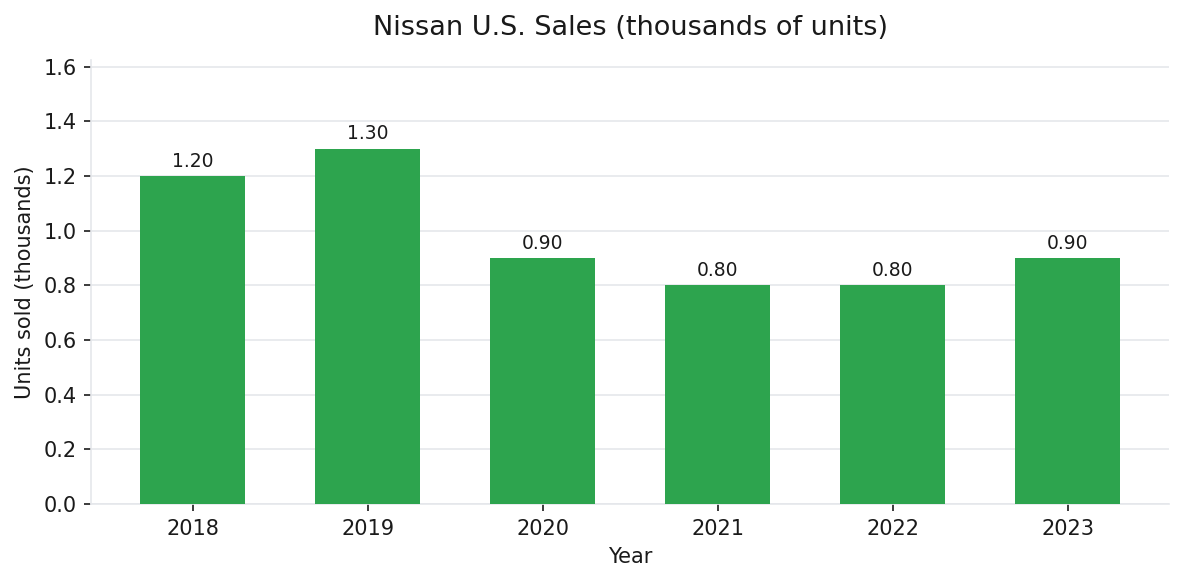
However, Ghosn's tenure ended in scandal with his arrest in 2018 on charges of financial misconduct. The fallout from this scandal shook the Renault-Nissan-Mitsubishi alliance and left lasting impacts on the company's governance and strategy.
In the wake of the Ghosn era, Nissan is focusing on rebuilding its image and stabilizing its operations. The company aims to continue its legacy of innovation while strengthening its market position.
Why VIN History Matters for Nissan Buyers
When purchasing a Nissan, especially models like the Altima and Rogue frequently found in rental fleets, it's crucial to consider the vehicle's VIN history. These models often have high incident rates due to their widespread use, making thorough research essential for informed decisions. Understanding a car's past can provide insights into its condition and longevity, ensuring a safer and more reliable ownership experience.
```