About Audi VIN Numbers
Audi vehicles manufactured in Germany carry VIN prefixes beginning with WAU for cars and WA1 for SUVs and crossovers. The e-tron electric models carry a WA1 prefix. Audi vehicles frequently appear in VIN checks related to hail damage claims, which are particularly common on sunroof-equipped models traded out of the midwest and central states.
Audi vehicles manufactured for the US market carry VIN prefixes of WAU, WA1, TRU. The VIN number encodes the country of manufacture (Germany), production plant, vehicle line, body style, engine type, model year, and a unique production sequence number.
What a Audi VIN Number Check Reveals
- Accident and collision history
- Odometer readings across all states
- Open safety recall status from NHTSA
- Title brands (salvage, flood, lemon law)
- Theft and recovery records
- Lien and ownership history
- Structural and frame damage reports
- Prior use (fleet, rental, taxi, auction)
About Audi
Four Companies, Four Rings
Audi’s iconic four-ring emblem is more than just a design; it represents the merger of four pioneering companies. This union took place in 1932, bringing together Audi, DKW, Horch, and Wanderer under the umbrella of Auto Union AG. Each ring symbolizes one of these brands, laying the foundation for the modern Audi we know today.
The company’s journey through history has been marked by both innovation and adversity. Following its formation, Auto Union became a significant player in the German automotive industry. However, the aftermath of World War II nearly spelled the end for the company. With its factories in East Germany seized and dismantled, the future looked bleak for Auto Union.
Rebuilding began in West Germany, and in 1965, Volkswagen purchased the struggling brand. This acquisition marked a turning point, setting the stage for Audi’s resurgence. The brand’s commitment to cutting-edge technology and design began to take shape, paving the way for the innovative cars that would follow.
Quattro: The Rally Revolution
In 1980, Audi introduced the quattro all-wheel-drive system at the Geneva Motor Show, and automotive history was made. The quattro system transformed Audi’s image, bringing all-wheel-drive technology from the realm of off-road vehicles to the mainstream car market. Its introduction to rallying showcased its potential, securing the brand’s reputation for performance and innovation.
The Audi Quattro stormed the rally world, demonstrating its capabilities in the World Rally Championship (WRC). The car’s dominance in the early 1980s was unprecedented, with drivers like Michèle Mouton and Hannu Mikkola taking victory after victory. This success on the rally circuit helped Audi establish a new performance-oriented identity.
The quattro system wasn’t just about winning races; it also set a new standard for road cars. It offered enhanced traction and stability, features that resonated with consumers and became a hallmark of Audi vehicles. The impact of the quattro system is felt to this day, as it remains a key feature in Audi’s lineup.
Audi in America
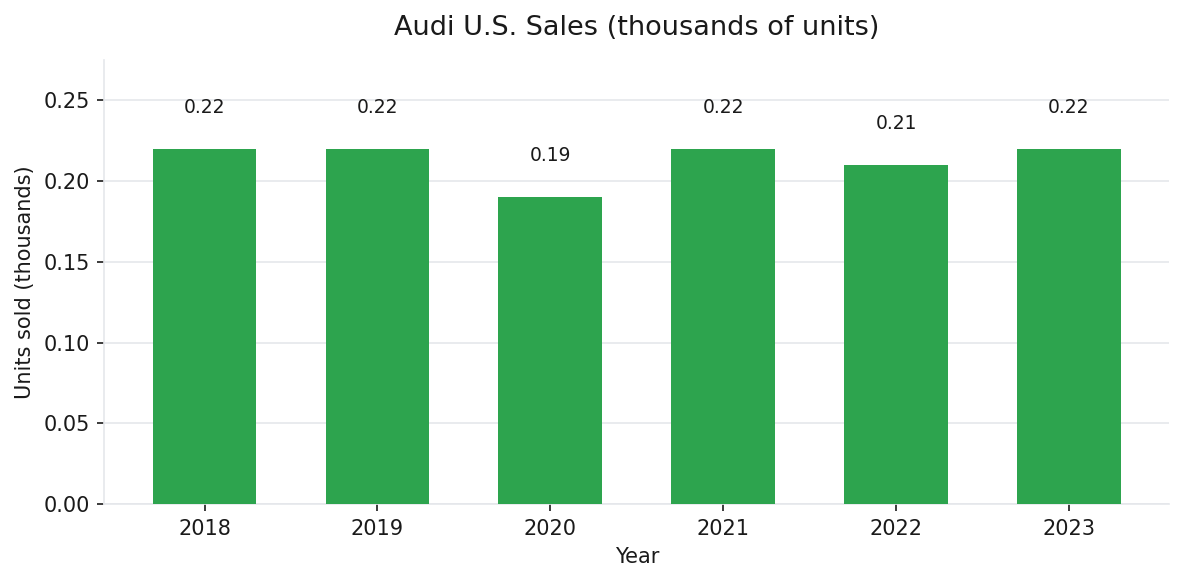
Audi’s journey to establish itself in the American market has been a strategic effort. The Audi 80, 90, and 100 models played a significant role in building a European reputation for quality and sophistication. These models introduced American buyers to the blend of engineering, performance, and luxury that Audi had become known for.
The introduction of the A4, A6, and A8 models further solidified Audi’s place in the premium segment. These vehicles offered a combination of advanced technology, luxury features, and performance that appealed to US consumers. The A8, in particular, showcased Audi’s capabilities at the high end of the market, featuring innovations like an aluminum space frame that reduced weight and improved efficiency.
As Audi continued to expand its presence in the US, the brand faced stiff competition from BMW and Mercedes-Benz. However, Audi’s strategy of combining technical prowess with luxury and style has proven successful. The launch of the TT and R8 sports models highlighted Audi’s versatility, offering cars that were not only high-performing but also design icons.
Sport, Luxury and Electrification
Audi’s evolution over the decades has been marked by a commitment to both sportiness and luxury. The quattro sport system has remained at the center of Audi’s performance offerings. It has been continually refined and adapted to meet the demands of modern driving, whether on the road or the track.
In recent years, Audi has turned its focus toward electrification with the introduction of the e-tron series. This shift represents Audi’s commitment to sustainability and innovation in the face of changing automotive landscapes. The e-tron models aim to blend the brand’s traditional values of quality and performance with the need for environmentally friendly solutions.
The e-tron lineup includes both SUVs and performance vehicles, ensuring that Audi’s electrified offerings cater to a wide range of buyers. This strategy places Audi in a strong position as the automotive industry moves towards a more sustainable future.
Why VIN History Matters for Audi Buyers
For prospective Audi buyers, understanding the vehicle’s history through its Vehicle Identification Number (VIN) is crucial. Audi vehicles are known for their premium features and driving experience, but they can depreciate quickly. Many used Audi cars come off lease, which often means they have a documented repair history that may contain gaps.
Particularly with models equipped with the quattro drivetrain, repairs can be complex and costly. A thorough VIN history check helps buyers identify past maintenance issues, any accident history, and ensures that any potential problems are understood before purchasing.
Informed decision-making is key to enjoying the full Audi experience, and a VIN history provides the transparency needed to make a sound investment. As Audi continues to innovate and push the boundaries of technology and design, understanding the history of a pre-owned vehicle becomes all the more important for savvy consumers.
```